BBQ Grill Pre-Shipment Inspection Checklist: How Buyers Should Use AQL


A BBQ grill pre-shipment inspection is one of the last opportunities to find product, packaging and documentation problems before an order leaves the factory. It should compare a production lot with the purchase order, signed specification, approved sample and artwork. It should not redesign the product after production is complete.
This guide is for importers, distributors, retail buyers and private-label brands sourcing charcoal, pellet or gas grills. It explains how to prepare an inspection file, use acceptance sampling responsibly and define model-specific checks. Buyers can first review AO YUE’s BBQ grill range to identify the correct inspection route.
What a Pre-Shipment Inspection Can Prove
A properly planned inspection provides evidence about the sampled units and the lot presented on that date. It can verify quantity, identity, workmanship, selected dimensions, assembly, agreed functions, labels and packaging. The report can support a release, hold or corrective-action decision.
However, sampling does not prove that every item is defect-free. A visual inspection also cannot replace laboratory testing, certification or continuous process control. The buyer should state the inspection objective before choosing a sample plan.
Prepare the Inspection File Before Production Ends
Send the inspector the purchase order, model list, approved specification, drawings, bill of materials where applicable, golden-sample record, artwork, packing requirements and defect criteria. Each file should show a revision or approval date.
This file gives the BBQ grill pre-shipment inspection a clear reference point and reduces subjective decisions at the factory.
The specification must separate verified requirements from sales claims. For example, dimensions need measurement points and tolerances. Materials need grades or controlled references. Certifications need model and factory scope. AO YUE’s gas grill OEM specification checklist shows how to lock those fields before sampling.
How AQL Sampling Works
ISO 2859-1:2026 defines acceptance sampling schemes indexed by acceptance quality limit for lot-by-lot inspection. The standard uses the lot size, inspection level and selected AQL to determine a sample size and acceptance or rejection numbers. It also includes switching rules for normal, tightened and reduced inspection.
AQL is a technical index used in a sampling plan. It is not permission for a supplier to intentionally ship defects. Nor is it a guarantee that an accepted lot contains no defects. Buyers should agree the standard edition, inspection level, AQL values and switching rules with the supplier or qualified quality professional.
Do not copy universal AQL values
Risk differs by product and defect. A sharp edge, gas-system error or unsafe electrical condition does not have the same consequence as a minor cosmetic mark. Therefore, this article does not prescribe one set of AQL values for every grill order. The buyer’s contract and quality plan should make that decision.
Define Critical, Major and Minor Defects
Write product-specific examples before inspection. A critical defect can create an unreasonable safety or regulatory risk. A major defect can prevent intended use, cause likely return or breach an important specification. A minor defect affects appearance or fit without materially reducing normal use.
| Class | Possible grill example | Buyer preparation |
|---|---|---|
| Critical | Sharp accessible edge, wrong safety label, exposed electrical part, or gas configuration mismatch | Define with product-safety and compliance specialists. |
| Major | Ignition failure, unstable cart, missing component, incorrect dimension, damaged coating or incomplete pack | Link each defect to a measurable requirement. |
| Minor | Small cosmetic variation outside an approved visible-area limit | Use boundary samples or clear photographs. |
Verify Product Identity, Quantity and Workmanship
First confirm the SKU, colour, fuel type, plug or gas configuration, accessories and carton markings. Compare finished and packed quantities with the order and packing list. Select samples randomly from different cartons and positions in the presented lot.
Workmanship checks can cover dents, corrosion, coating, weld condition, burrs, fasteners, door and lid alignment, wheels, handles and shelf fit. Approved cosmetic limits should identify visible zones, viewing conditions and allowable variation.
Measure Dimensions Against a Controlled Drawing
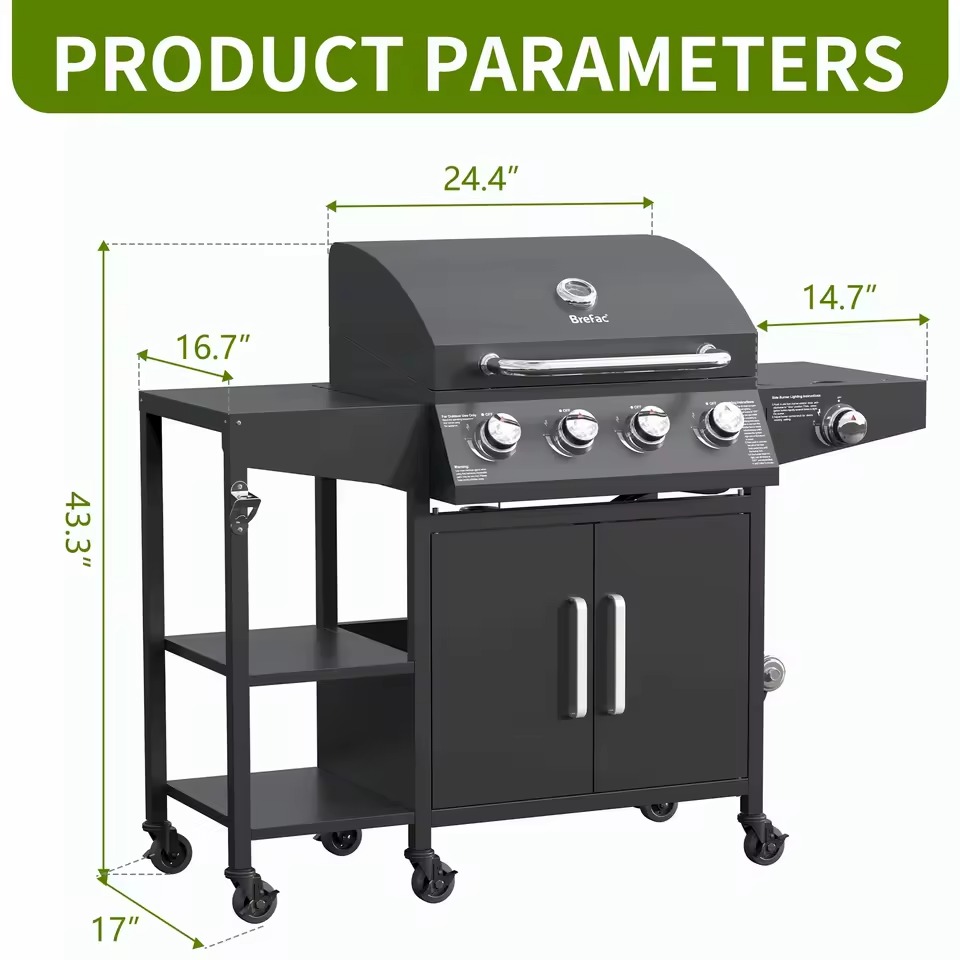
Inspection measurements need defined points, units, tolerances and calibrated equipment. A product image is not a complete drawing. For example, the media-library graphic below labels five dimensions on the AO YUE four-burner gas grill platform, but it does not show one complete overall-width measurement.
Measure only the agreed critical and sampled dimensions unless the plan states otherwise. Record actual values rather than writing only “pass.” If a drawing and physical sample conflict, hold the decision until the buyer identifies the controlling revision.
Use Model-Specific Functional Checks
Charcoal grills
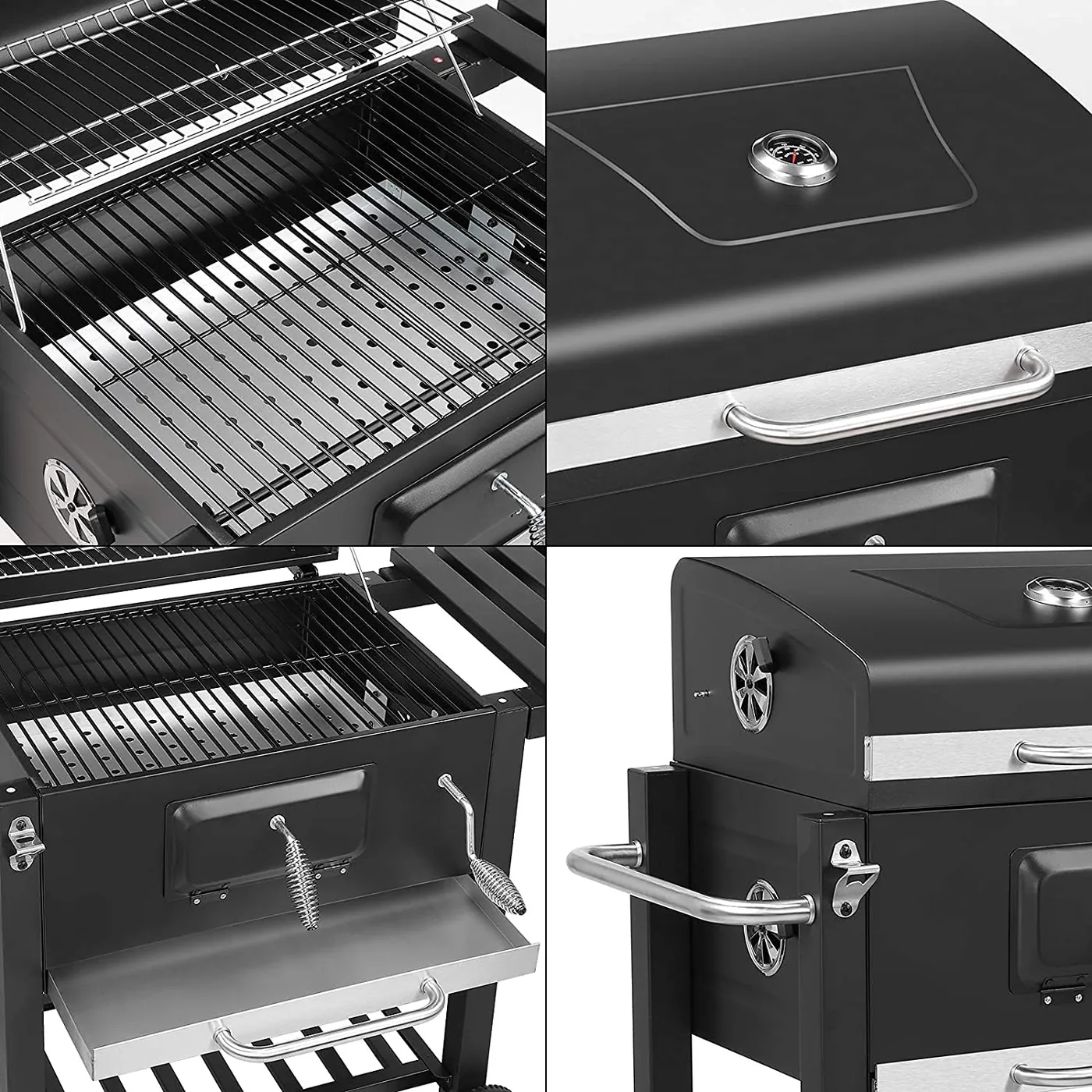
Check lid and door movement, cart stability, dampers, charcoal access, ash-tray fit, cooking racks, thermometer presence and assembly hardware. Do not perform a burn test unless the approved procedure, location and trained personnel are available. The charcoal grill OEM specification guide provides additional RFQ fields.
Pellet grills
Verify the controller, rated electrical configuration, wiring, sensor, auger, fan and ignition system against the approved test procedure. Functional testing should include acceptance criteria, operating duration and evidence. Packaging must protect the controller, hopper, shelves and wheels; see the pellet grill packaging checklist.
Gas grills and fire pits
Confirm model identity, gas category, labels, supplied hose or regulator and controlled components. Gas soundness, ignition, flame stability and combustion checks must follow the applicable procedure and be completed by qualified personnel. A general visual inspector should not improvise gas tests.
Inspect Packaging, Labels and Manuals
Open sampled cartons according to the approved plan. Verify product orientation, internal supports, hardware bags, manuals, accessories, surface protection, closures and carton markings. Record carton dimensions and gross weight when they affect freight or retailer requirements.
Check model labels, warnings, barcodes, country-of-origin information and destination language against approved artwork. A correct product with the wrong label or manual can still create a shipment hold.
Require Evidence, Not Only a Pass Result
The report should identify the factory, date, order, presented lot, model, sampling standard, inspection level, sample size and acceptance criteria. It should include defect counts by class, actual measurements, functional results, package findings and clear photographs.
Every failed item should have a traceable image and description. The report should distinguish observations from the buyer’s final release decision. The inspector reports evidence; the buyer decides whether to release, rework, reinspect or reject according to the contract.
Buyer-Ready BBQ Grill PSI Checklist
- Freeze the product, packaging and artwork revisions.
- Define the lot, sampling standard, inspection level and agreed AQL values.
- List critical, major and minor defect examples by SKU.
- Confirm quantities, identity, workmanship and selected dimensions.
- Run only approved, model-specific functional checks.
- Verify labels, manuals, accessories, carton construction and markings.
- Require photographs, actual measurements and defect counts.
- Document corrective action and reinspection rules before shipment release.
Turn Inspection Results Into a Release Decision
A strong BBQ grill pre-shipment inspection connects the approved sample with measurable production and packaging evidence. AQL sampling helps manage inspection effort and lot-acceptance risk, but it works only when the defect definitions and product requirements are clear.
To prepare an inspection-ready OEM project, review AO YUE’s manufacturer evaluation checklist. Then send AO YUE your SKU list, destination, order quantity and inspection requirements so the production documents can be aligned before shipment.
Technical References
- ISO 2859-1:2026, sampling procedures for inspection by attributes
- ASQ, attribute and variable sampling plans
- ASQ, selecting statistically valid sampling plans
- U.S. CPSC, gas grill safety guidance
This article is a procurement guide, not statistical, legal, certification or product-safety advice. The sampling plan and tests must be confirmed for the final product, lot, destination and contract.
