
EU Gas Grill Compliance Checklist: What Importers Must Verify Before OEM Production

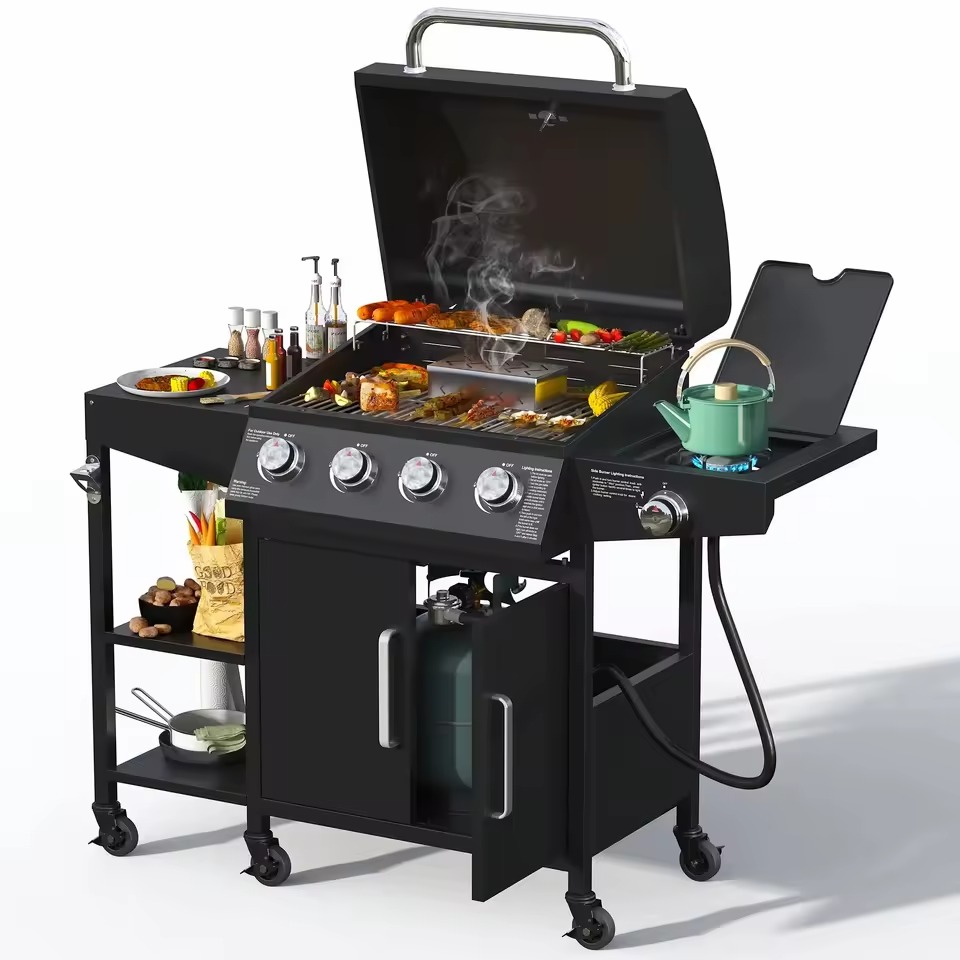
EU gas grill compliance should be planned before an importer approves a sample or bulk order. A grill that looks suitable in a catalogue may still need a different gas category, supply pressure, regulator, label or instruction set for its destination market. These details affect conformity assessment and cannot be left until the final inspection.
This checklist is for EU importers, private-label brands and distributors sourcing outdoor gas barbecues. It explains which decisions belong in the purchase specification and which claims need documentary evidence. Buyers can also review AO YUE’s gas grill category when preparing a model brief.
Fix the Destination Market Before Sampling
Regulation (EU) 2016/426 covers appliances that burn gaseous fuels, including appliances used for cooking. However, an EU-wide legal framework does not mean every country uses the same gas supply arrangement. Member States communicate the gas types and supply pressures used in their territories.
The buyer should therefore name every destination country in the specification. The factory then needs controlled requirements for the gas family, appliance category, nominal supply pressure and connection arrangement. A sample prepared for one market should not be treated as a universal EU sample without technical review.
Understand the Economic Operator Responsibilities
The manufacturer is responsible for designing and manufacturing the appliance in accordance with applicable requirements. It must complete the relevant conformity assessment, prepare technical documentation, draw up the EU Declaration of Conformity and affix required markings when compliance is demonstrated.
An importer established in the EU has its own duties. According to the European Commission’s official summary, the importer must verify that conformity assessment has been carried out, required documentation is available and the appliance bears the CE marking. The importer must also provide its name and contact address on the appliance, packaging or accompanying document as permitted by the rules.
These responsibilities make supplier selection more than a price comparison. Use the existing gas grill OEM specification checklist to convert commercial choices into controlled product requirements.
Build the Compliance Evidence Pack
Ask for evidence that relates to the exact model and configuration being purchased. A certificate or test report for a similar appliance is not enough. Model identifiers, gas categories, pressures, components and factory details should align across the product, test evidence and declaration.
Documents to request and review
- EU Declaration of Conformity for the exact appliance model.
- Conformity-assessment evidence and notified-body information where the selected procedure requires it.
- Technical documentation identifying the design, materials, safety controls and applicable requirements.
- Test reports with model coverage, standard edition, configuration and result pages.
- Approved rating plate, carton labels, warnings and instruction manual.
- Critical-component list with controlled supplier and part references.
The manufacturer generally needs to retain the technical documentation and EU Declaration of Conformity for ten years after the appliance is placed on the market. Importers should ensure the documents remain accessible to the relevant authorities for the required period.
Use EN 498 Carefully
EN 498 is a European standard for dedicated liquefied petroleum gas appliances used outdoors, including barbecues. Its scope covers construction, performance and safety characteristics. Buyers should confirm the applicable edition and whether the selected product and gas configuration fall within its scope.
A standard is part of the technical route, not a marketing badge. The product’s complete compliance position may involve additional legislation or standards depending on its features. Electrical accessories, radio functions or other integrated systems can create separate requirements. A qualified conformity-assessment professional should confirm the route for the exact model.
Control Gas Category, Pressure and Components
The approved specification should identify the burner, injector, valve, regulator, hose and connector arrangements. It should also control nominal heat input, combustion settings and ignition components. Never approve a change only because the replacement part appears physically compatible.
For each destination, compare the product configuration with the certification evidence and rating plate. If a buyer plans one model for several countries, the technical file should explain the approved variants and their traceability. This step is central to EU gas grill compliance.
Approve the Rating Plate and Traceability
The appliance or data plate must carry required identification and technical information. The official EU summary includes the manufacturer name, registered trade name, appliance category, gas supply pressure and year information associated with the CE marking. The exact layout should be checked against the applicable conformity route and approved artwork.
Product, carton, manual and declaration identifiers must agree. The buyer should also define batch or serial traceability. Clear traceability helps isolate affected production if a component, label or test record later proves incorrect.
Prepare Instructions for Each Market
Safety information and instructions must be understandable to users in the Member State where the appliance is sold. Language requirements should be confirmed country by country. Do not rely on an English-only manual for a multi-country launch unless the responsible market authority permits it.
Instructions should match the approved configuration. They need correct connection, leak-checking, outdoor-use, clearance, lighting, shutdown, cleaning and storage information. Marketing artwork must not contradict safety warnings or approved operating limits.
Lock Compliance Before Bulk Production
Add a compliance gate to the sample approval process. Bulk production should not begin until the responsible parties have approved the model configuration, test evidence, declaration, labels, manual and critical components. Record every approval with a revision date.
During production, control changes to valves, injectors, burners, regulators, hoses, fasteners and safety labels. A substitution can affect compliance even when the finished grill looks unchanged. The purchase agreement should require written approval before any controlled component changes.
Verify the Shipment Against the Approved File
A pre-shipment inspection can confirm identity, workmanship, labels, packaging, selected dimensions and agreed functions. It cannot create missing certification or replace laboratory assessment. Inspectors need the approved file and model-specific defect criteria.
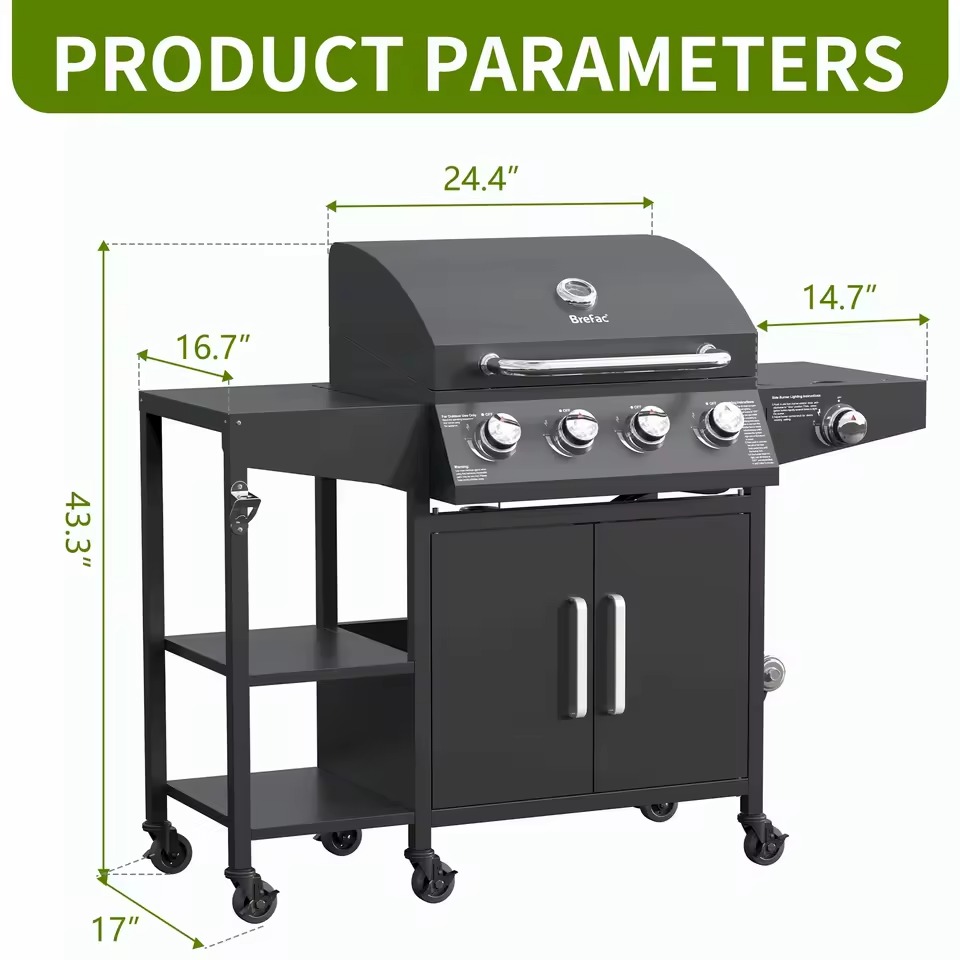
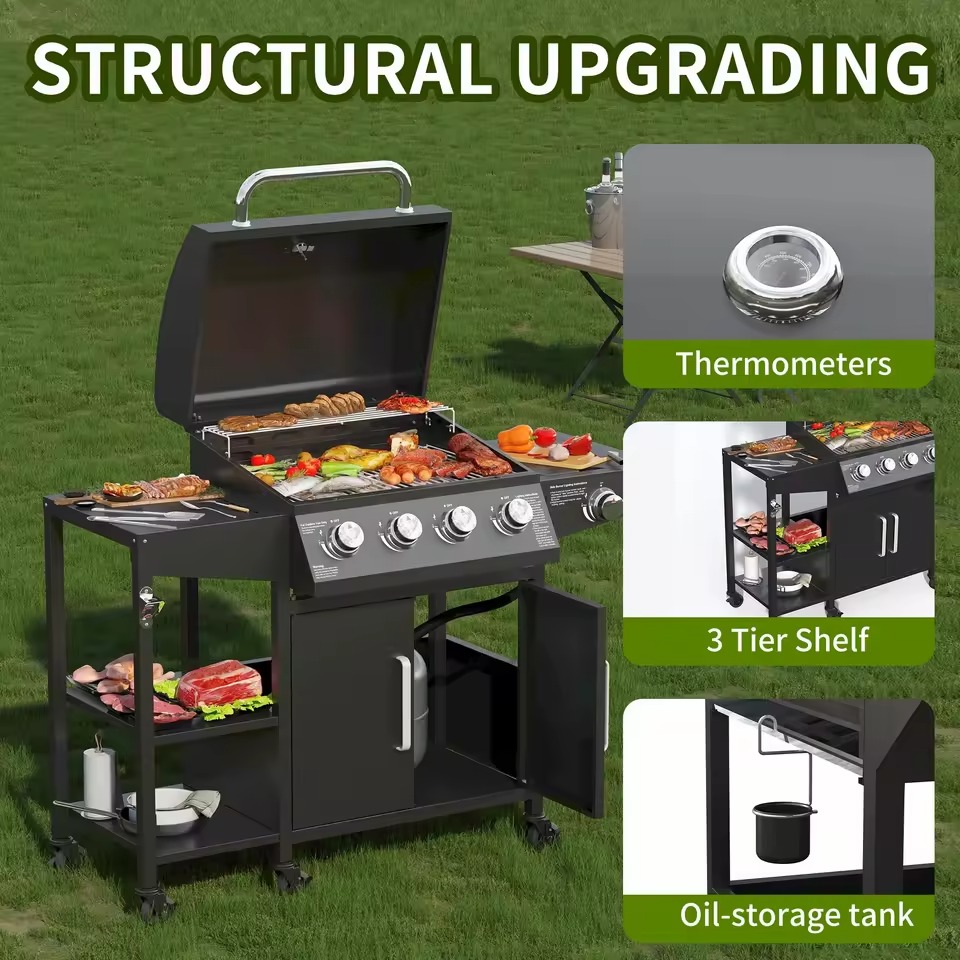
Use AO YUE’s BBQ grill pre-shipment inspection and AQL checklist to plan lot sampling after the compliance route is fixed. Buyers can also review a specific four-burner gas grill platform as a configuration reference. Certification status and target-market suitability must still be verified for the selected OEM project.
Buyer Checklist Before Issuing the Purchase Order
- Name the destination countries and responsible EU importer.
- Define the gas category, pressure and connection for each market.
- Confirm the applicable legislation, standards and conformity route.
- Match all reports and certificates to the exact model configuration.
- Approve the Declaration of Conformity, rating plate and traceability method.
- Approve instructions and warnings in the required languages.
- Freeze critical components before production.
- Inspect bulk goods against the approved compliance file.
A strong EU gas grill compliance process connects market requirements with engineering, documentation and production control. For an OEM configuration review, send AO YUE your target countries, gas specifications and product brief. Any compliance decision should be confirmed by qualified specialists for the exact appliance and destination.
Official Reference Sources
- EUR-Lex: Appliances burning gaseous fuels
- European Commission: Manufacturers and CE marking
- European Commission: Importers and distributors
- DIN Media: EN 498 standard scope
Information checked on 13 August 2026. This buyer guide is not legal or certification advice.
