

Charcoal Grill OEM Specification Checklist: What Wholesale Buyers Should Confirm Before Sampling

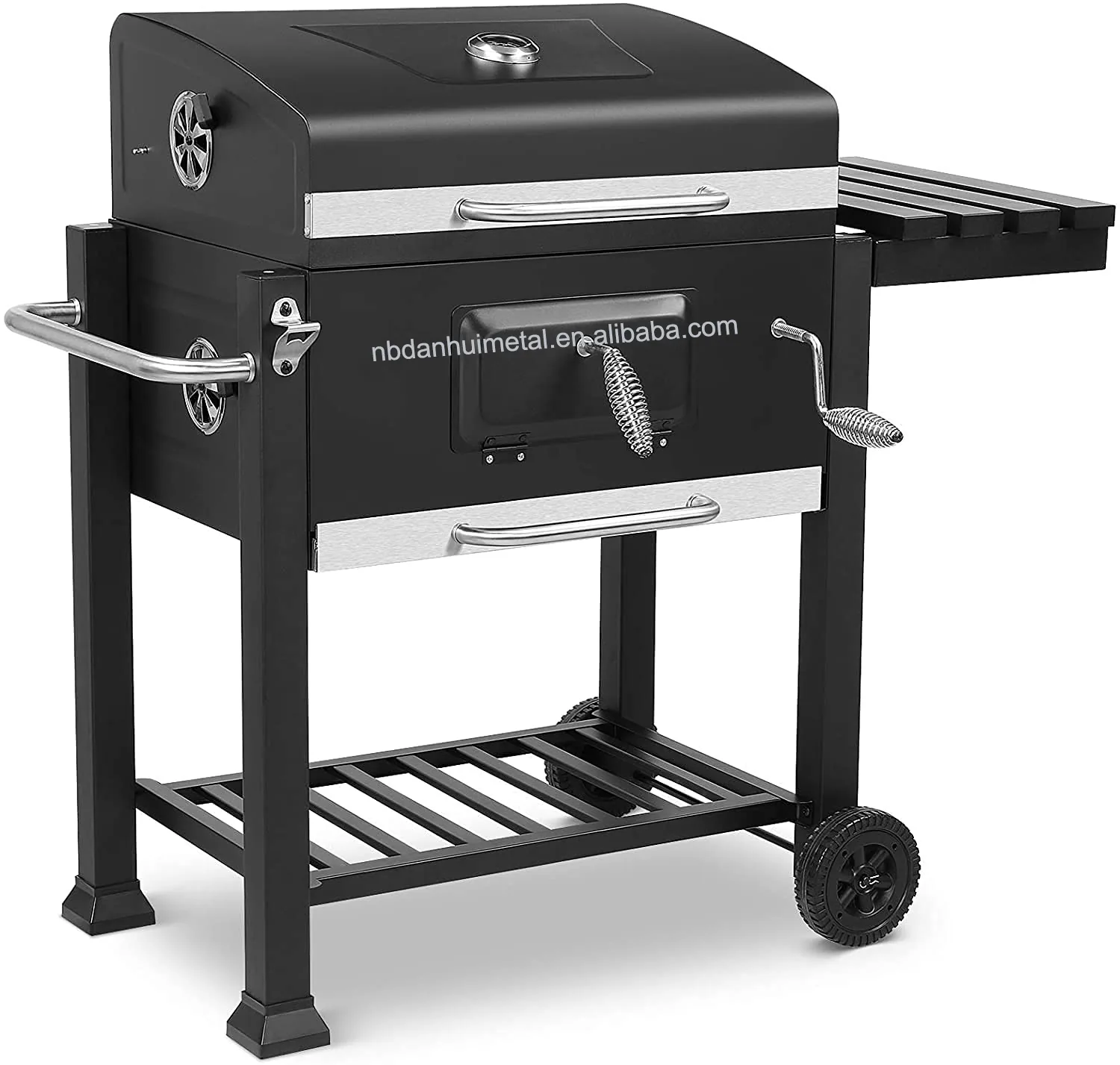
Charcoal grill OEM specifications should be settled before a buyer approves a sample. A product photo can show the basic format, but it cannot confirm steel grade, coating system, cooking area, packed weight, or target-market compliance. Those details belong in a controlled specification sheet.
This guide is written for importers, distributors, retail buyers, and private-label brands. It explains which data to request, how to connect an RFQ with the physical sample, and how to separate verified facts from assumptions. Buyers can first compare AO YUE’s charcoal grill range and broader BBQ grill categories before selecting a platform.
Why a Detailed RFQ Prevents Sampling Errors
Words such as “large,” “heavy duty,” or “commercial” are not measurable. Two suppliers may interpret them differently. Therefore, a useful RFQ must state the target product type, required dimensions, materials, finish, accessories, packaging route, and acceptance criteria.
The same revision should appear on the quotation, approved drawing, bill of materials, sample record, packaging file, and inspection checklist. Otherwise, the buyer may approve one configuration and receive another.
Start With Product Type and Intended Use
First, identify the grill format. Common options include kettle grills, cart grills, barrel grills, vertical smokers, tabletop units, and combination products. State whether the product is intended for a patio, camping range, retail promotion, or higher-volume outdoor cooking.
Also define the fuel and use environment. Charcoal products must be described for outdoor use. The U.S. Consumer Product Safety Commission warns that charcoal produces carbon monoxide and must not be burned inside homes, vehicles, tents, or other enclosed spaces. Product artwork and manuals should not imply indoor use.
Record Dimensions, Cooking Area and Working Height
Ask for open and closed product dimensions. Include handles, side shelves, chimneys, wheels, and other projections. Record the working height and the space required to open the lid or access the charcoal chamber.
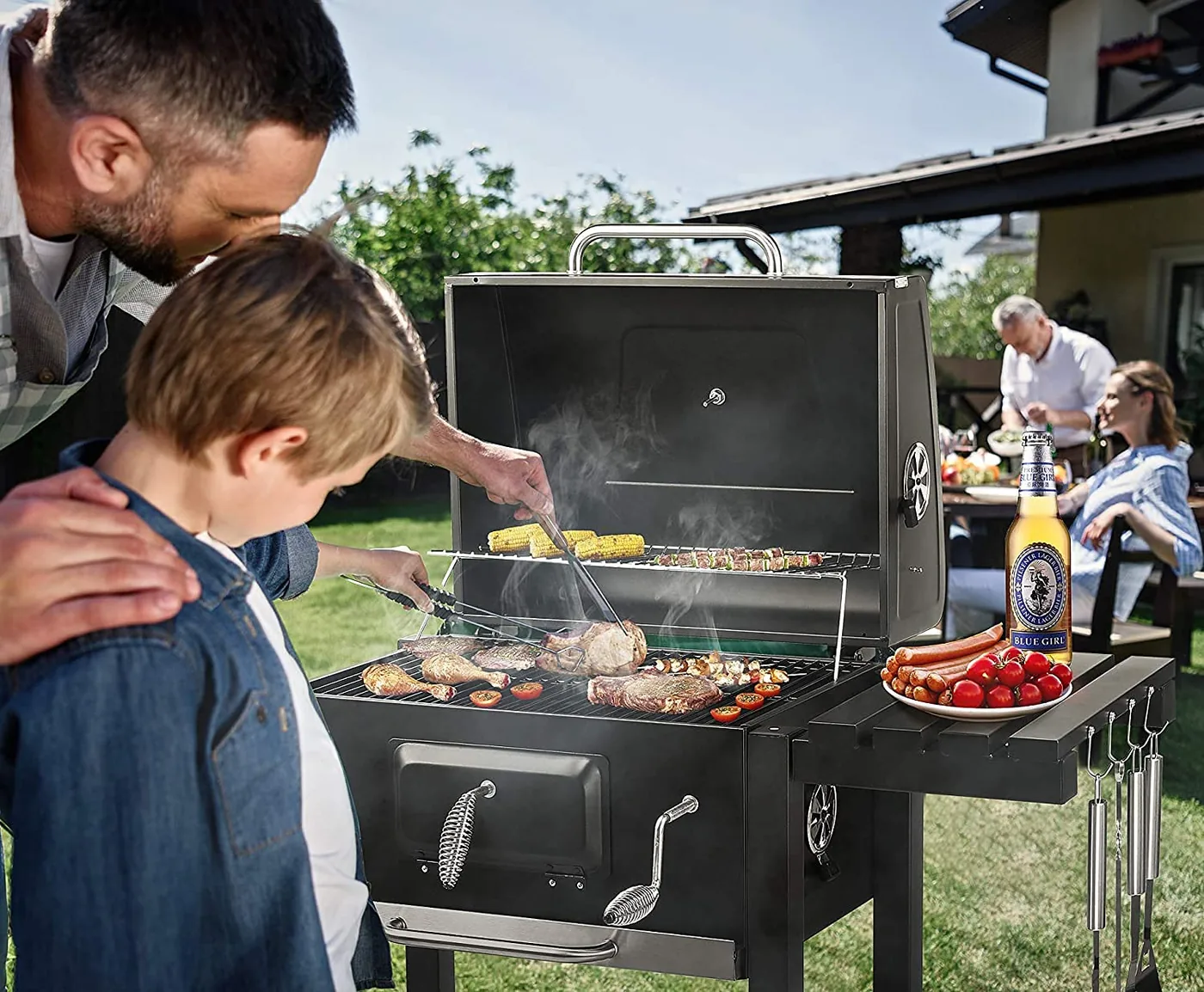
Cooking area should be stated in square centimetres and square inches. Separate the primary grate from the warming rack. Do not estimate capacity from a lifestyle image. A buyer should also request grate dimensions, usable spacing, and the method used to calculate the stated area.
As a market reference, Weber publishes product dimensions, weight, fuel type, grate material, and primary cooking area for its charcoal grills. This illustrates the level of structured information retail buyers may expect. It does not establish the specification for an AO YUE model.
Confirm Materials and Surface Finishes
A material entry should be more precise than “metal” or “steel.” Ask for the material and thickness of the lid, fire bowl, cart, charcoal tray, cooking grate, warming rack, handles, and fasteners. If stainless steel is required, record the grade. If a component is coated, identify the coating system and colour.
Food-contact parts need separate confirmation. The buyer should approve the grate material, surface treatment, weld condition, and cleaning instructions for the destination market. In addition, corrosion expectations should match the intended storage and climate.
Specify Airflow, Fuel Access and Heat Control
Charcoal temperature depends strongly on airflow. Weber’s operating guidance explains that opening dampers increases airflow and heat, while closing them reduces both. Consequently, buyers should inspect damper location, adjustment range, retention, and access while the grill is hot.
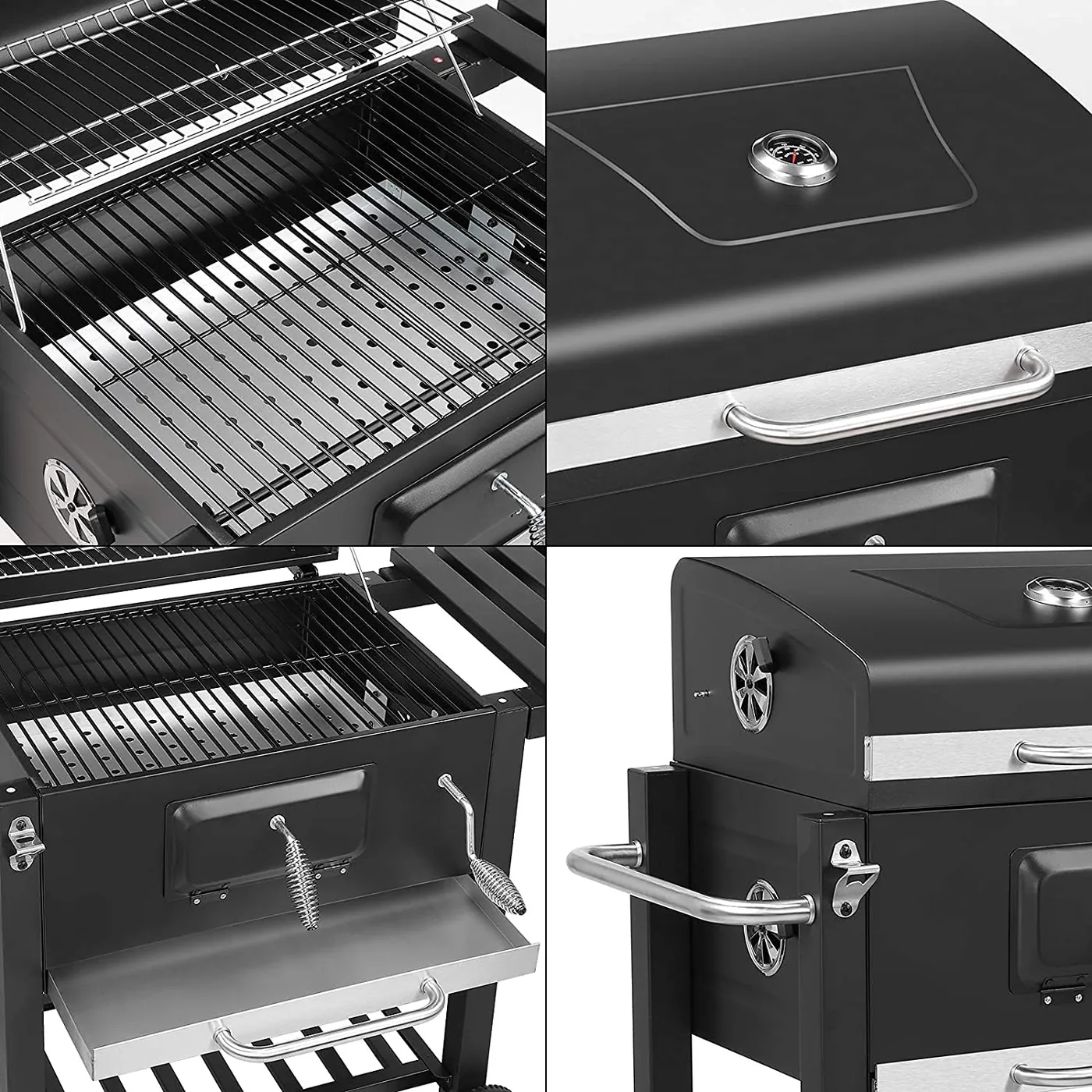
Fuel access also affects usability. A front charcoal door can allow refuelling without removing food. However, the buyer should check the door latch, hot-surface risk, clearance, and whether ash can escape during operation. If the charcoal tray is height-adjustable, record the adjustment method and usable positions.
Check Ash Removal, Stability and Assembly
Ash handling should be reviewed from the fire bowl to final disposal. Confirm whether the ash tray is removable, how it is retained, and whether it can be emptied without spilling through the cart. The manual should require the product to cool before ash removal.
For trolley models, record the number and diameter of wheels, locking method, foot design, shelf construction, and handle locations. During sample approval, check movement, rocking, lid operation, sharp edges, and stability with shelves open. Assembly should be tested using the supplied tools, hardware, and manual.
Use Product Images as Evidence, Not as a Complete Datasheet
Images can provide useful model-specific facts when the SKU relationship is clear. They should still be verified against the quotation and approved sample. The following example comes from the source image set assigned to model AY-TL021.
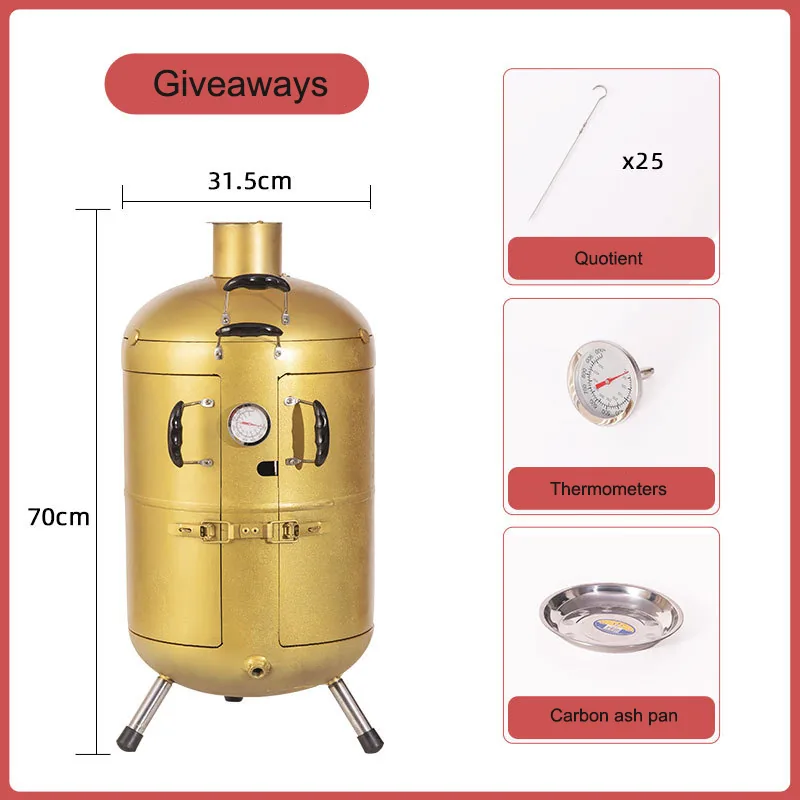
| AY-TL021 image field | Value visible in source image | Buyer action |
|---|---|---|
| Body width shown | 31.5 cm | Confirm measurement points and production tolerance. |
| Overall height shown | 70 cm | Confirm whether the lid, chimney and legs are included. |
| Accessories labelled | 25 skewers, thermometer, ash pan | List quantities and materials in the packing specification. |
| Not confirmed by image | Steel grade, thickness, net weight, coating and carton data | Request a signed technical datasheet before ordering. |
Buyers can review the published AY-TL021 product page and the trolley-style AY-TL020 product page. Product images are reference material. The final contract specification should control the order.
Add Safety Information and Market Requirements
Safety and compliance requirements depend on the destination and product design. For Great Britain, BSI lists BS EN 1860-1:2024 as the current standard for solid-fuel barbecues. Its published scope covers materials, construction, design, test methods, markings, and instructions. Buyers should confirm the applicable edition and market route with a qualified laboratory or compliance adviser.
Do not copy another brand’s warnings or certification claims. Instead, define the destination, language, product configuration, and responsible importer. Then obtain model-specific label, manual, and test requirements.
Control Packaging and Inspection Evidence
The charcoal grill OEM specifications should include packed dimensions, net and gross weight, carton construction, internal supports, accessory fixation, pallet policy, loading quantity, shipping marks, and barcode position. The packaging drawing should match the assembled product revision.
Before mass production, approve a golden sample and a complete pack-out. Add measurable checks for dimensions, materials, finish, grate fit, vent movement, door and lid operation, wheel installation, hardware count, labels, manuals, and packaging. Photograph critical steps and record the sample revision.
Charcoal Grill RFQ Checklist
- Model number, product type, target market, use case, and sales channel.
- Open and closed dimensions, cooking area, working height, and product weight.
- Materials, thicknesses, grate finish, coating system, and colour standard.
- Air vents, charcoal access, tray adjustment, thermometer, and ash removal.
- Wheels, shelves, handles, tool hooks, fasteners, and included accessories.
- Warning labels, manual languages, test requirements, and document ownership.
- Carton dimensions, gross weight, pack-out drawing, pallet plan, and loading data.
- Sample revision, production tolerances, inspection level, and acceptance criteria.
Prepare a Comparable OEM Quotation
Good charcoal grill OEM specifications turn product ideas into comparable quotations. They also give the factory, laboratory, inspector, and buyer the same reference. Most importantly, verified data prevents attractive images from being mistaken for contractual evidence.
Learn more about AO YUE’s manufacturing background. To review a charcoal grill project, send AO YUE the target market, model reference, expected quantity, required features, packaging route, and compliance documents. The team can then confirm which information is available and which points require sampling or testing.
Technical References
- BSI: BS EN 1860-1:2024 scope and publication information
- U.S. CPSC: Charcoal and carbon monoxide safety
- Weber: published charcoal grill specification example
- Weber: charcoal grill airflow and damper guidance
This article is a procurement guide. It is not legal, product-safety, certification, or inspection advice. Requirements must be confirmed for the final model, production site, destination, and sales channel.
