

Gas Grill OEM Specification Sheet: 12 Items Buyers Should Lock Before Sampling

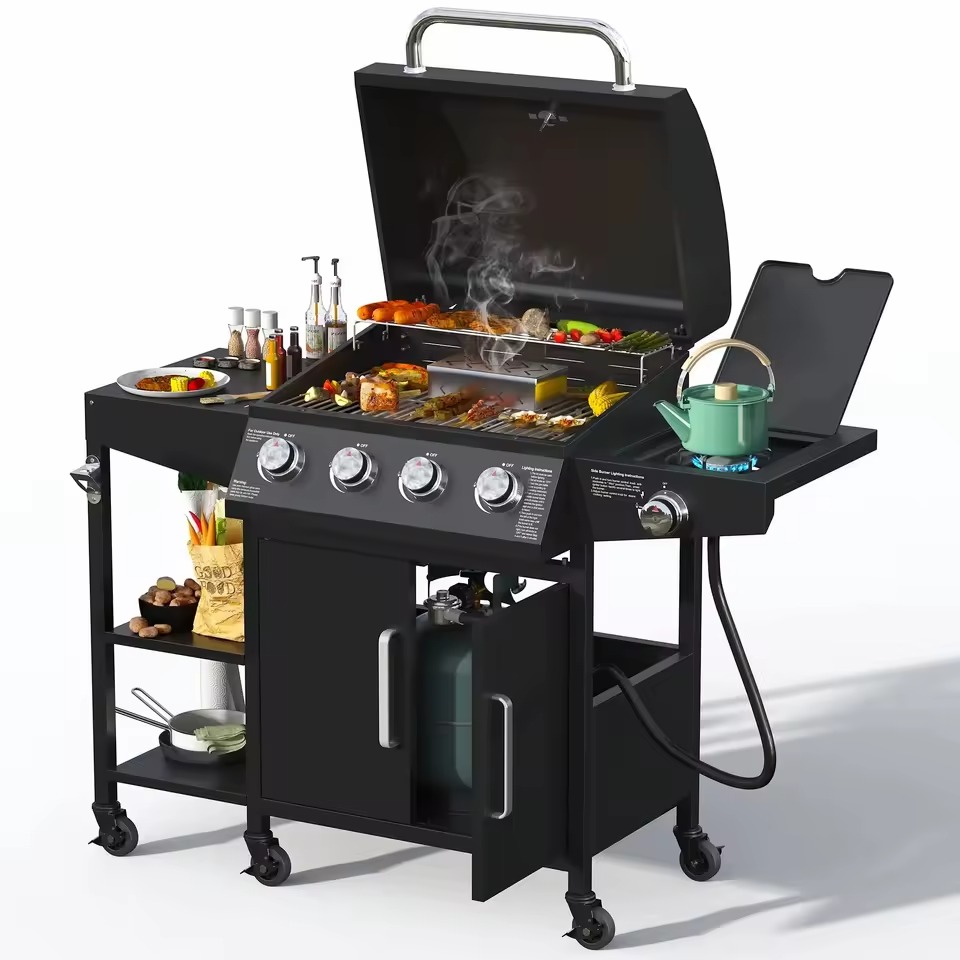
Gas grill OEM specifications should be agreed before a buyer approves a sample. A product image may show the burner layout, cabinet and side shelves. However, it cannot confirm the gas category, nominal heat input, material grade, regulator, test scope or packed configuration.
This guide is for importers, retail buyers, distributors and private-label brands. It explains which fields belong in a controlled specification sheet and which checks belong in sample approval. Buyers can compare AO YUE’s gas grill category with the broader BBQ grill range before choosing a platform.
1. Lock the Destination Market Before the Product
Start with the country of sale, fuel type and installation category. The United States and Canada commonly use ANSI Z21.58/CSA 1.6 for outdoor cooking gas appliances. In Europe and the United Kingdom, BS EN 498 covers construction, performance, safety, testing and marking for outdoor LPG barbecues within its scope.
These standards are not interchangeable purchasing labels. Buyers must confirm the current edition, national requirements and certification route with a qualified laboratory or compliance adviser. Regulators, hoses, cylinder connections, labels and manuals may also vary by destination.
2. Use One Controlled Gas Grill Specification Sheet
The quotation, drawing, bill of materials, sample record, manual, carton artwork and inspection checklist should carry the same model and revision. A complete gas grill OEM specifications file should identify the owner and approval date for that revision. At minimum, lock the following twelve fields.
| Specification group | Fields to lock before sampling |
|---|---|
| Market and gas | Destination, LPG or natural gas, gas category, pressure and connection system |
| Performance | Burner count, input per burner, total nominal input and control range |
| Cooking system | Primary area, warming area, grate material and heat-distribution parts |
| Construction | Overall dimensions, materials, thicknesses, coating, wheels and shelves |
| Gas train | Valves, manifold, hose, regulator, ignition and critical-component references |
| Supply | Accessories, spare parts, manual, carton, packed weight and loading data |
3. Define Burner Count and Heat Input Separately
Burner count alone does not describe performance. Record the nominal input of each main burner and side burner, then state the total using one unit system. Avoid mixing BTU per hour and kilowatts without a documented conversion.
Also define the burner material, port pattern, flame-control range and replacement reference. A buyer should be able to connect every burner claim with a drawing, rating label and test record. The product page for AO YUE’s four-burner propane grill provides a platform for discussion, but the order specification should control the final values.
4. Measure Cooking Area Instead of Estimating Capacity
State the primary cooking area and warming area separately in square centimetres and square inches. Record the usable grate dimensions and the method used to calculate area. Lifestyle photos and food-count claims are not reliable measurement methods.
Buyers should also approve the grate material, surface treatment, spacing and removal method. Review heat tents or flame tamers, warming racks and grease paths as separate components because they affect cleaning, replacement and heat distribution.
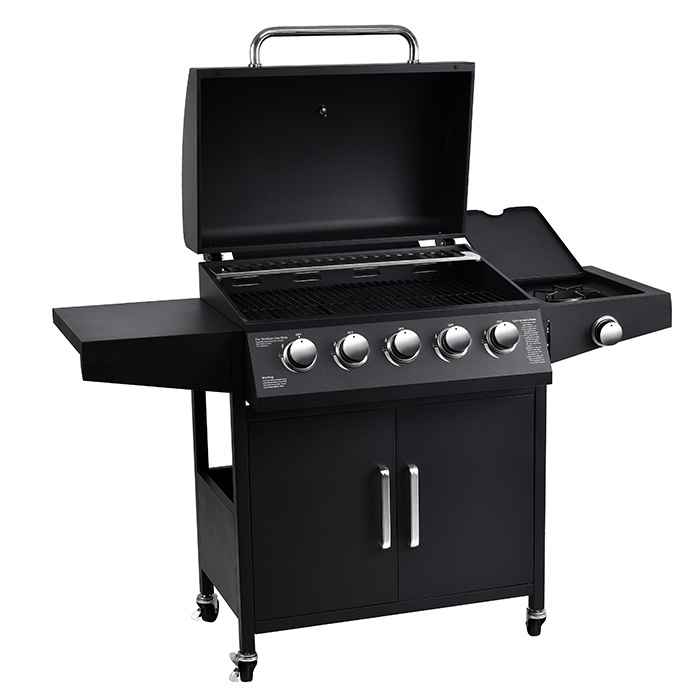
5. Specify Materials by Component
Terms such as “stainless steel body” are too broad for purchasing. List the material, grade or substrate, thickness and finish for the lid, firebox, control panel, doors, shelves, frame, fasteners and grease tray. Record food-contact surfaces separately.
Corrosion expectations should match the intended environment and retail positioning. Ask how coated and stainless components will be checked during incoming inspection and production. Cosmetic samples are useful, but they do not replace controlled material records.
6. Control Ignition, Valves, Hoses and Regulators
The gas train is market-sensitive. Record each valve, manifold, hose, regulator, connector and ignition component by approved reference. Substitutions should require documented review rather than an informal production decision.
The U.S. Consumer Product Safety Commission advises users to inspect hoses, connections and burner tubes, and to correct leaks or blockages before operation. For buyers, these consumer safety points become design, manual and inspection requirements. Sample review should therefore include access to connections, hose routing, ignition repeatability and clear operating instructions.
7. Convert Product Images Into Measurable Checks
A source image can provide model-specific evidence when its relationship to the product is confirmed. The following media-library graphic is associated with AO YUE’s four-burner gas grill. It labels several dimensions, but it does not define all measurement points or tolerances.
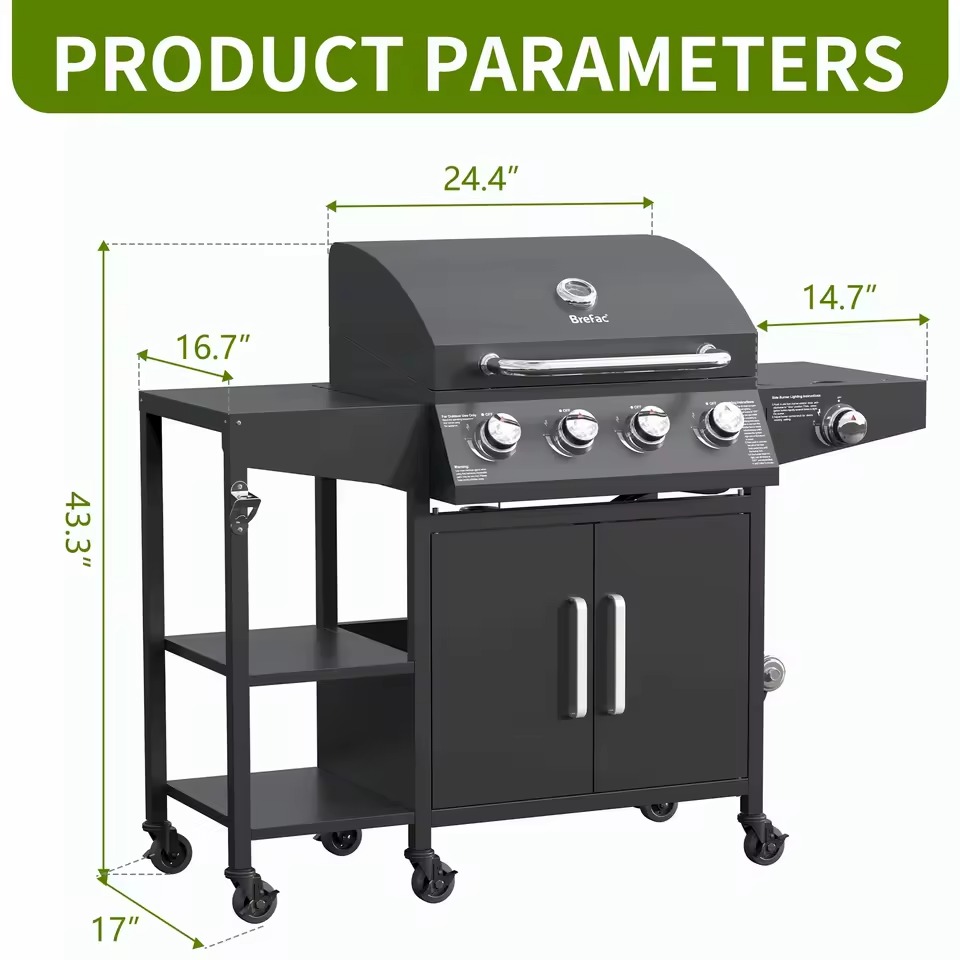
The graphic confirms a 43.3-inch vertical label and four other inch labels around the hood and side structures. It does not show a complete overall-width dimension. Therefore, these numbers should be copied into an RFQ only with a marked drawing that defines the start and end points.
8. Match Compliance Evidence to the Final Configuration
A statement that a product is “CE” or “CSA” is not enough for sample approval. Ask which finished model, factory, gas category, pressure, components and standard edition the evidence covers. Then verify the certificate or directory record with the issuing body.
BS EN 498 states that it applies to type testing within its scope. ANSI Z21.58/CSA 1.6 addresses outdoor cooking gas appliances for the U.S. and Canadian markets. Neither reference proves that an AO YUE model is certified. Certification status must be verified for the selected construction and destination.
9. Build a Repeatable Sample-Approval Test
Use the supplied regulator, hose, hardware and instructions during assembly. Record assembly time, missing parts, sharp edges, stability, caster locking and door alignment. Next, conduct qualified checks for gas soundness, ignition, flame stability, control response and burner operation according to the applicable procedure.
Also inspect lid movement, handle clearance, grease collection, access for cleaning and surface condition after operation. Photographs and signed results should identify the sample model and revision.
10. Approve Packaging, Manuals and Spare Parts
A technically acceptable grill can still fail commercially if parts move in transit or assembly instructions are unclear. Lock the carton dimensions, gross and net weight, internal protection, hardware packs, warning labels and pallet plan. Verify loading quantities only after the final packed sample exists.
Ask for a spare-parts list covering ignition components, grates, burners, valves, hoses, regulators and commonly damaged cosmetic parts. The manual should match the destination language, fuel system and approved configuration. Buyers can review AO YUE’s manufacturer evaluation framework for additional factory-audit questions.
11. Questions to Send With a Gas Grill RFQ
- Which destination, gas category and pressure is this configuration designed for?
- What are the input values for every main burner and side burner?
- How are primary and warming cooking areas measured?
- Which materials, thicknesses and finishes apply to each component?
- Which finished model and factory are covered by the compliance evidence?
- Which components are controlled, and how are substitutions approved?
- What are the final carton data, loading plan and spare-parts commitments?
12. Prepare a Buyer-Ready Sampling Package
Strong gas grill OEM specifications connect market requirements, drawings, components, performance data, packaging and acceptance tests. They also make supplier quotations easier to compare. Most importantly, they prevent a visually approved sample from becoming an uncontrolled production reference.
Review the five-burner propane gas grill, or send AO YUE your destination market, required configuration and forecast quantity. The team can prepare a manufacturing discussion without treating unverified specifications or certifications as confirmed facts.
Technical References
- BSI: BS EN 498:2012 outdoor LPG barbecues
- CSA Group: ANSI Z21.58:22/CSA 1.6:22 bulletin
- U.S. CPSC: Gas Grills Fact Sheet
- U.S. CPSC: Summer Grill Safety Tips
Importers targeting European markets should also review our EU gas grill compliance checklist before approving the final OEM configuration.
This article is a procurement checklist, not legal, certification or installation advice. Requirements must be confirmed for the final product, factory, fuel system, destination and sales channel.
