

BBQ Grill Private-Label Manual and Warning Artwork Approval Checklist

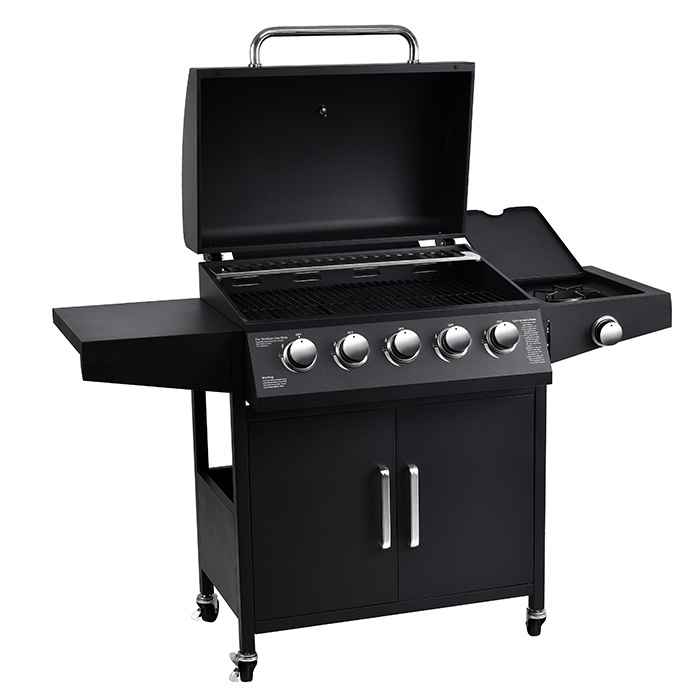
What You’ll Learn
This checklist helps private-label BBQ grill buyers control the manual, appliance label, carton artwork, and retail copy as one documented approval set. You will learn how to connect each file to an exact product configuration, destination market, language set, and revision. It also shows where to stop and request model-specific evidence instead of relying on an old template or a product photograph.
A BBQ grill private-label manual and warning artwork approval checklist is a production-control tool, not a declaration that a product is approved for every country. Before an artwork file is released, the buyer needs a clear answer to a simple question: does every consumer-facing document describe the same final product, for the same market?
Start by identifying the product family in the gas grill product category. A category page or product image is useful for selecting a reference product, but it is not a substitute for a controlled model record, final sample, manual proof, or market-specific documentation.
Set the Product Identity Before Copywriting
Do not begin with a recycled label layout. First, create one project reference that names the product model or drawing reference, the selected fuel configuration, the destination market, the brand, and the revision date. Add any changes that affect the physical product, such as the control layout, ignition arrangement, accessories, or market version. When an item remains undecided, mark it as open rather than allowing it to disappear into artwork notes.
The gas grill OEM specification checklist is the earlier procurement record for this work. Freeze the requested configuration there before asking a designer or translator to prepare consumer-facing files. Otherwise, the manual can describe one version while the approved sample or later production order reflects another.
Separate the Manual, Appliance Label, Carton, and Retail Listing
These assets may share facts, but they should not be approved as one unnamed bundle. Give the instruction manual, appliance label, carton artwork, and retail listing their own file names, revision IDs, owners, and approval dates. The buyer can then see which file changed and whether the related files need to be reviewed again.
Instruction manual
Review the final PDF for the exact product reference, intended market, planned languages, and the operating or care information that belongs to that configuration. Do not assume an old manual remains correct because the product looks similar. CPSC safety material and manufacturer recall notices illustrate why incomplete or mismatched instructions can become a real user-safety issue. The correct content still depends on the exact product and destination.
Appliance label and carton artwork
Request readable proofs, not only a low-resolution mockup. Compare every model-specific field with the supporting record for the selected product. Treat the carton as a separate approval because retail, logistics, and warning content may change independently from the appliance label. Do not derive fuel type, pressure, testing status, certification coverage, or market suitability from the image alone.
Retail listing
A web listing is commercial content, not a source of technical truth. It should use only claims that have been cleared for the final product and market. Keep the listing release separate from the physical packaging release so a marketplace update cannot silently become a manufacturing instruction.
Build an Approval Matrix for Model, Market, and Language
Create a matrix with one row for each product and destination combination. Include the model or drawing reference, fuel configuration, target country, language versions, manual file, appliance-label file, carton file, retail listing, owner, and approval status. This makes gaps visible before cartons are printed or translated copy is reused.
For a multi-country project, do not assume one English document answers every local requirement. Record the planned markets and ask the responsible compliance or legal reviewer which language and information obligations apply. If the product or market changes, make a new revision instead of editing a previously approved file without a trail.
Keep Safety and Operating Copy Tied to Evidence
The useful test is not whether a warning sounds familiar. It is whether the statement is supported by the exact product, applicable documentation, and target market. CPSC advises consumers to follow the manufacturer’s instructions and to use outdoor grills safely. That does not turn any sample sentence into a universal label requirement for every grill, fuel, or jurisdiction.
Ask the supplier to identify the source for each model-specific statement: a controlled drawing, instruction document, test or listing record, approved product field, or destination-specific requirement. When evidence is missing, place the line on an open-items list. Do not fill the gap with a claim copied from a competitor, an unrelated certificate, or an AI-generated description.
The EU gas grill compliance checklist explains a related discipline: certificate holder, model range, date, target market, and limitations must be checked rather than inferred. Apply the same evidence-first habit to every artwork approval, even when this article’s workflow is being used for a North American private-label project.
Approve One Revision Across Sample, Quote, and Production
Before mass production, assemble a release pack containing the approved product reference, quotation or bill of materials reference, sample record, manual PDF, appliance-label proof, carton proof, language list, and open-items status. Each item should carry a revision that can be compared. A buyer should be able to ask which documents apply to the bulk order and receive one clear answer.
The pre-production sample approval checklist can anchor the physical-sample side of this release. If the sample changes after its approval, reopen the corresponding documentation review. A product revision without a documentation review can leave the buyer with an approved sample and outdated consumer materials.
Pre-Production Documentation Checklist
Use the BBQ grill private-label manual and warning artwork approval checklist as a release gate, with one owner accountable for each unresolved line.
- Identify the exact product, configuration, brand, and destination market.
- Assign separate revision IDs to the manual, appliance label, carton, and retail listing.
- Confirm planned languages and name the reviewer responsible for each destination.
- Compare model-specific claims against traceable product or regulatory evidence.
- Link the approved documentation pack to the approved sample and production release.
- Record unresolved questions before printing, packaging, or listing publication.
Frequently Asked Questions
Can one manual be used for every market?
Not automatically. The buyer should confirm the markets, language versions, product configuration, and applicable local obligations before reusing a manual.
Does a certificate image approve the label artwork?
No. A certificate image alone does not prove the current label is correct. Compare the certificate holder, model range, date, market, and limitations with the final product record and artwork proof.
What happens when the approved sample changes?
Reopen the document review. The buyer should decide which files are affected, assign a new revision where needed, and retain the approval trail with the production release.
Bring Documentation Control Into the RFQ
Ask AO YUE for a model-specific quotation together with the documents, market information, languages, and artwork inputs needed for your review. A clear documentation request makes it easier to identify unresolved questions before bulk production begins.
This article is a procurement workflow, not legal, regulatory, certification, or product-safety advice. Use the BBQ grill private-label manual and warning artwork approval checklist only after the buyer confirms the exact product, market, and supporting documentation.
Plan a Model-Specific Documentation Review
Share your product reference, target market, languages, and private-label artwork needs before requesting final production files.
Source and Scope Note
General workflow references reviewed on 12 October 2026 include CPSC grill safety guidance and a CPSC manufacturer safety notice. They support the need to follow model-specific instructions; they do not define a complete approval standard for every product or market.
