

BBQ Grill Grate Materials for OEM Buyers: Cast Iron, Stainless Steel, or Porcelain-Coated?

BBQ grill grate materials affect much more than the appearance of an OEM sample. They influence weight, handling, cleaning instructions, corrosion risk, replacement-part planning and the evidence needed for a food-contact surface. Yet quotations often use vague terms such as “cast iron grate” or “stainless cooking grid” without defining the actual construction.
This guide helps importers, private-label brands and product managers compare cast iron, stainless steel and porcelain-enameled grates. It also explains what belongs in a controlled specification before sample approval. Buyers can start with AO YUE’s BBQ grill range, then use the checks below for the selected model and destination market.
How to Compare BBQ Grill Grate Materials
A useful specification names both the substrate and the surface. “Porcelain grate” is incomplete because porcelain enamel is a coating, not the load-bearing base. A porcelain-enameled grate may use cast iron or another declared metal underneath. Likewise, “stainless steel” should not be treated as one universal material. Grade, section size, weld construction and finish can change the result.
The buyer should therefore ask two questions. What is the base material? What surface treatment touches food? This distinction prevents a factory, buyer and laboratory from discussing different constructions under the same short name.
Cast Iron Grates: What Buyers Should Verify
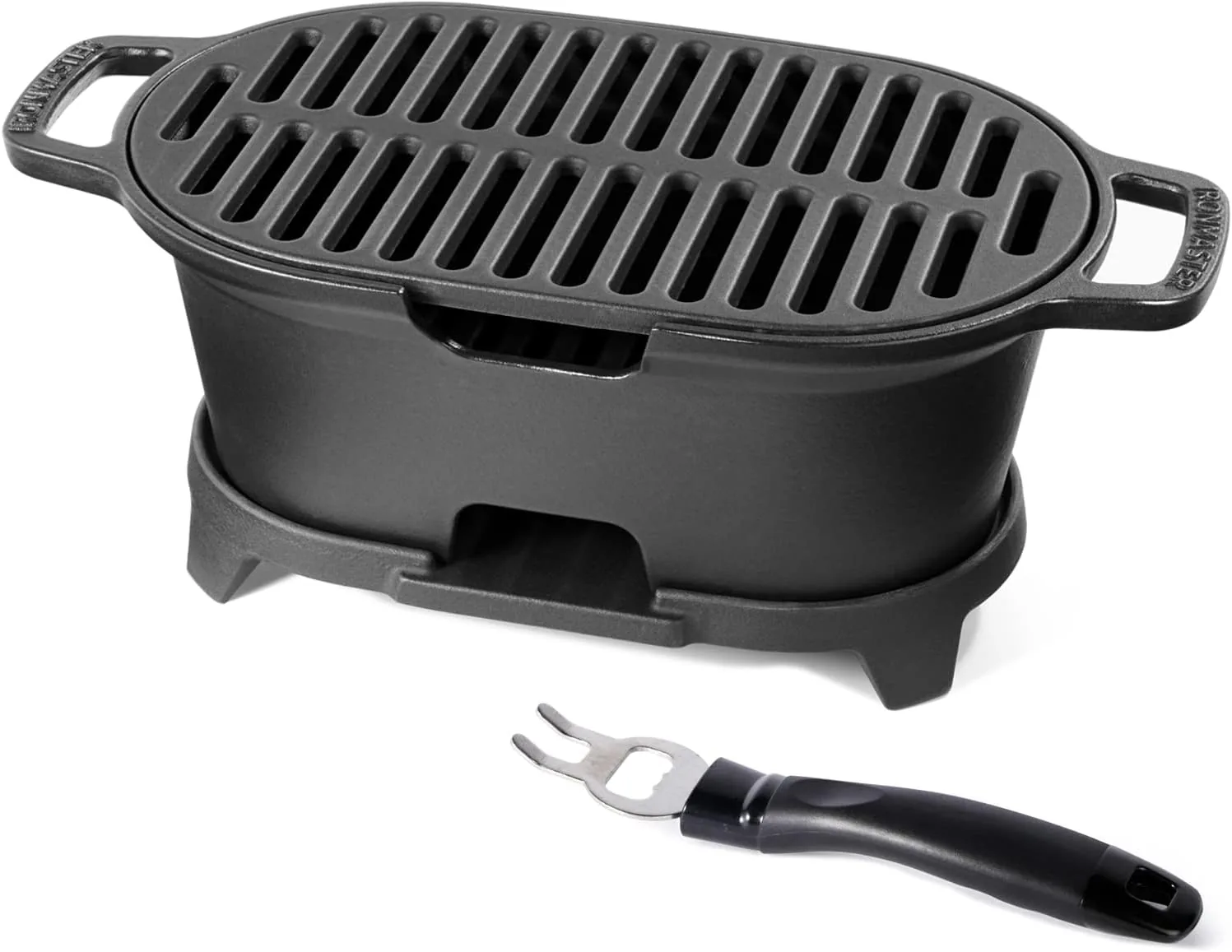
Cast iron grates are often selected for their substantial sections and heat-holding behavior. However, those benefits depend on the real geometry and mass. A thin or lightly built component should not be evaluated only by its material name.
For an uncoated cast iron surface, confirm the seasoning or protective treatment, care instructions and rust-prevention expectations. Ask how the grate is stored before assembly and protected during shipment. Also approve the bar or rib profile, edge condition, lifting points and fit in the firebox. These details affect cleaning, handling and replacement.
Stainless Steel Grates: Grade Is Only One Field
Stainless steel may simplify routine care in some programs, but the word “stainless” is not a complete purchasing requirement. The supplier should declare the grade and product form. The specification should also state rod or sheet dimensions, weld locations, surface finish and permissible distortion.
Buyers should avoid assuming that every stainless grade behaves the same in heat, salt, grease or outdoor storage. The intended environment, cleaning chemicals and retail warranty all matter. If a grade is important to the claim, request traceable material evidence and define how production will be checked.
Porcelain-Enameled Grates: Control the Coating System
Porcelain enamel can provide a smooth protective surface over a metal substrate. Wolf’s technical guidance, for example, describes its porcelain grates as cast iron with a porcelain coating. That manufacturer statement explains one construction, not every product in the market.
For an OEM program, specify the substrate, coating location, color and acceptable appearance. Define how chips, exposed edges, pinholes, rough areas and incomplete coverage will be judged. Packaging also matters because impact between loose parts can damage a coated surface before the buyer receives the sample.
Use a Buyer Comparison Table, Not a Universal Winner
| Construction | Potential purchasing value | Approval focus |
|---|---|---|
| Bare or treated cast iron | Substantial sections and serviceable removable parts | Treatment, rust care, mass, fit and edge condition |
| Stainless steel | A metal surface without an enamel layer | Grade, section size, welds, finish and distortion |
| Porcelain-enameled metal | A coated food-contact surface over a defined substrate | Substrate, coverage, defects, impact protection and replacement policy |
No row is automatically the best choice. The correct decision depends on target price, expected care, product positioning, warranty, replacement strategy and destination requirements. Compare the complete construction, not the material label alone.
Write the Grate as a Controlled Component
The cooking grate should have its own part number and revision. Record the base material, declared grade where required, manufacturing method, overall dimensions, section dimensions, weight, surface treatment and approved color. Add fit points, allowable movement and the method used to remove the grate.
Link these fields to the drawing, bill of materials, sample record and inspection checklist. The same approach belongs in a broader gas grill OEM specification sheet or charcoal grill specification checklist. If any field changes, the buyer should know whether new testing or sample approval is required.
Confirm Food-Contact Evidence for the Sales Market
In the European Union, cooking grates fall within the wider food-contact-material framework. The European Commission states that all food-contact materials placed on the EU market must comply with Regulation (EC) No 1935/2004. They must also be manufactured under the good manufacturing practice requirements in Regulation (EC) No 2023/2006. Additional national or material-specific rules may apply.
For the United States, FDA describes food-contact substances broadly and evaluates authorizations for defined conditions of use. Buyers should not replace that review with a generic “FDA certified” statement. Request evidence that identifies the substance or coating, supplier, intended food-contact use and applicable authorization. A laboratory or compliance specialist should confirm the evidence for the finished grate and destination.
Build Material Checks Into Sample Approval
Start with the approved drawing and component record. Check fit, stability, flatness, removal and visible finish. For welded stainless constructions, inspect the agreed weld pattern and distortion. For enameled parts, inspect coverage, contact points, edges and impact damage. For treated cast iron, confirm the approved surface condition and care instructions.
Then define the use and cleaning cycle for the sample. Record the fuel, duration, cleaning method and observations instead of writing “heat tested.” Any acceptance limit must come from an approved procedure or applicable standard. Do not invent a pass temperature or cycle count simply to make the report look precise.
Plan Packaging and Replacement Grates Together
A heavy grate can mark nearby panels. A coated grate can chip if it moves against hardware. Approve separators, bags, corner protection and the final packed orientation. Repeat the check after the carton configuration is frozen.
Also decide whether replacement grates will be stocked, how they will be identified and how long the part reference will remain stable. The owner manual, carton parts list and after-sales database should use the same number. This turns a material choice into a manageable service commitment.
Need a Model-Specific Grate Review?
Send AO YUE the grill model, target market, grate construction, cleaning expectations and replacement-part plan. The team can identify which fields are documented and which require confirmation before sampling.
Frequently Asked Questions
Is cast iron or stainless steel better for a grill grate?
Neither is universally better. Compare the exact construction, target price, care instructions, corrosion expectations, warranty and replacement strategy for the intended market.
Is a porcelain-coated grate made entirely from porcelain?
No. Porcelain enamel is a surface coating over a metal substrate. The buyer should identify both the substrate and coating system in the specification.
Can an OEM buyer accept a generic FDA certificate for a grate?
A generic claim is not enough. Evidence should match the food-contact substance or coating, intended use and relevant authorization for the finished component.
What should be checked on a porcelain-enameled sample?
Check the approved substrate, coverage, color, edges, contact points, visible defects, impact damage, fit and packaging protection against the agreed criteria.
Reference Sources
- European Commission: Food Contact Materials
- U.S. FDA: Food Packaging and Food-Contact Substances
- U.S. FDA: Food-Contact Substances Listed in 21 CFR
- Wolf: BBQ Grill Grate Construction and Care
Sources checked on 27 August 2026. This article is a procurement guide, not legal or certification advice. Requirements must be confirmed for the final component, product, factory, intended use and destination market.
