OEM vs ODM BBQ Grills: Which Sourcing Model Fits Your Brand?

Choosing between OEM vs ODM BBQ grills is not simply a choice between “custom” and “standard.” The sourcing model affects design responsibility, tooling, sample approval, compliance evidence, intellectual property and the speed of market entry. Buyers should define those responsibilities before requesting a price.
This guide is for importers, distributors, retailers and private-label brands sourcing outdoor cooking products. It compares three practical routes: an existing platform with private-label changes, an ODM project led by the supplier’s design, and an OEM project built to buyer-controlled requirements. Buyers can start by reviewing AO YUE’s BBQ grill product categories.
What OEM, ODM and Private Label Mean
The terms are used differently across suppliers, so the contract and specification matter more than the label. In a typical OEM arrangement, the buyer controls the product design or detailed requirements and the factory manufactures to those requirements. In an ODM arrangement, the supplier contributes or controls the underlying product design and adapts it to the buyer’s brief.
A useful OEM vs ODM BBQ grills comparison therefore begins with design control, not with the supplier’s marketing label.
Private label often starts with an existing factory platform. The buyer may change the logo, color, control panel artwork, manual and retail packaging while leaving the core structure unchanged. A project can also be hybrid: it may begin with an ODM platform and add buyer-controlled components or features.
When an Existing Platform Is the Better Choice
An existing platform can reduce engineering work and make the first sample easier to define. It is useful when a buyer needs a faster market test, has limited development resources or wants differentiation mainly through branding and packaging.
However, “existing” does not mean ready for every country. The buyer still needs to confirm materials, dimensions, performance, labels, instructions and target-market compliance. Logo placement should not cover warnings or required markings. Packaging changes also require artwork approval and transport review.
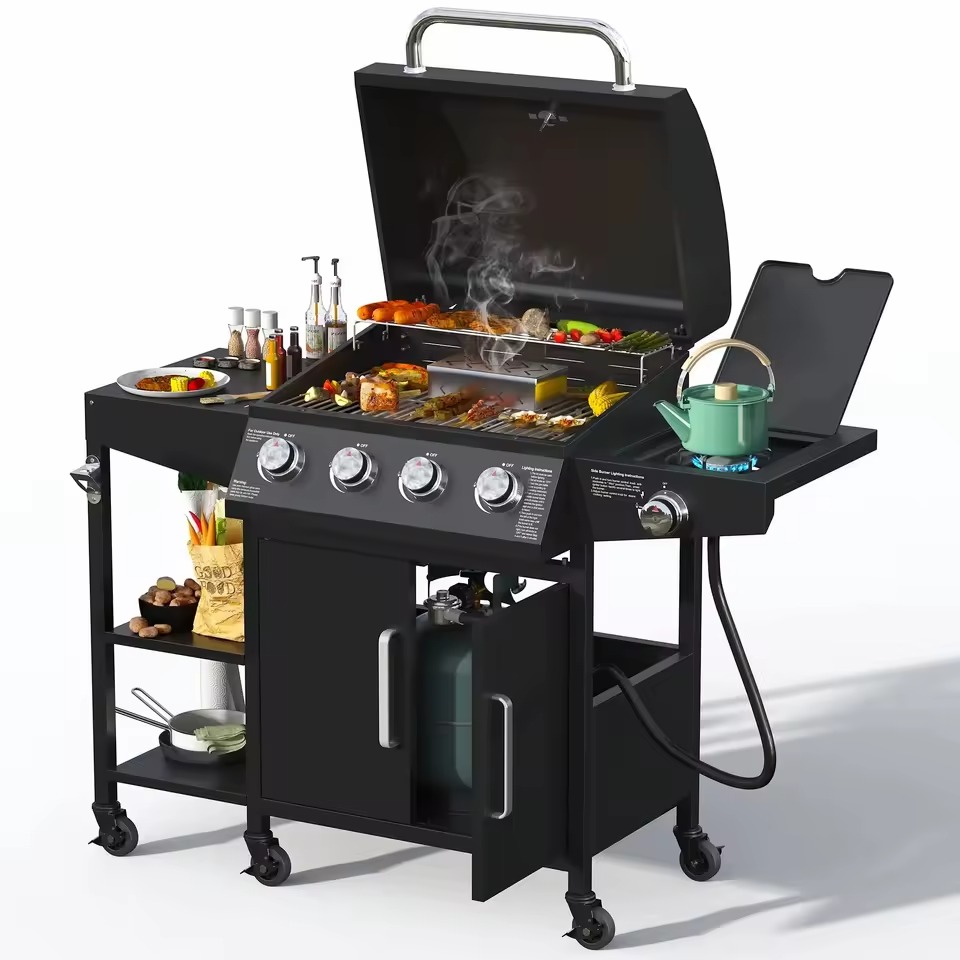
AO YUE’s four-burner gas grill platform can be used as a reference when preparing an RFQ. The product page is not evidence that every requested modification or regional gas configuration is approved.
When Buyers Should Choose ODM
ODM can suit a buyer that wants more differentiation than simple labeling but does not have a complete engineering package. The supplier may propose an existing chassis, design changes, materials and component options. The buyer then approves the commercial and technical result.
The main questions concern ownership and reuse. Can the supplier sell the base design to other customers? Which modifications are exclusive? Who owns new drawings, tooling and packaging artwork? The agreement should answer these questions instead of relying on informal descriptions such as “exclusive model.”
Control the modification boundary
List every change from the base model. Separate cosmetic changes from structural, gas-system or electrical changes. A new color may need coating validation. A new burner, valve, controller or airflow path can affect performance and compliance. The assessment route should be reviewed before the change is approved.
When Full OEM Development Makes Sense
Full OEM is appropriate when the buyer has controlled drawings, unique functional requirements or a product architecture that should not be shared. It can support stronger differentiation, but it also places more responsibility on the buyer’s brief and change decisions.
The factory needs complete inputs: target markets, dimensions, materials, tolerances, components, performance requirements, packaging, test methods and acceptance criteria. Missing information creates quotation assumptions. Those assumptions can later become cost, timing or quality disputes.
Before sampling, use a model-specific document such as the gas grill OEM specification checklist. This helps convert design intent into measurable requirements.
Compare the Three Sourcing Models
| Decision factor | Private label | ODM | OEM |
|---|---|---|---|
| Starting point | Existing product | Supplier-led design platform | Buyer design or requirements |
| Typical change scope | Branding and packaging | Selected design and feature changes | Extensive controlled development |
| Key buyer risk | Limited differentiation | Unclear ownership or modification scope | Incomplete design inputs and validation burden |
| Best document | Approved configuration sheet | Base-model change matrix | Controlled technical specification |
This table is a decision framework, not a promise about MOQ, price or lead time. Those terms depend on the selected SKU, materials, tooling, packaging, order plan and factory capacity.
Understand Cost, MOQ and Lead-Time Drivers
Private-label projects often require less product engineering, while OEM development may involve drawings, tooling, pilot builds and several approval rounds. Yet there is no universal quantity or schedule for either model. Printed packaging, special components and surface finishes can create their own minimum batches.
Ask the supplier to separate product MOQ, packaging MOQ, component MOQ and mixed-container conditions. Also ask which event starts the quoted production lead time: deposit, final artwork approval, sample approval or material confirmation.
Protect Design Ownership and Exclusivity
The purchase agreement should identify ownership of pre-existing designs, buyer-supplied drawings, new engineering work, molds, fixtures, software and packaging artwork. If exclusivity is required, define the product, territory, period, sales commitment and permitted exceptions.
Do not assume that paying a tooling charge automatically transfers every design right. Ownership, storage, maintenance, access and disposal of tooling should be written into the agreement. Obtain appropriate legal advice for the relevant jurisdictions.
Match Compliance Evidence to the Final Model
Neither OEM nor ODM removes the importer’s compliance responsibilities. Reports and certificates must cover the final model, configuration and target market. A modification can affect the relevance of existing evidence even when the external appearance changes very little.
For EU gas projects, review the EU gas grill compliance checklist before freezing the sample. Other markets and grill types require their own review by qualified specialists.
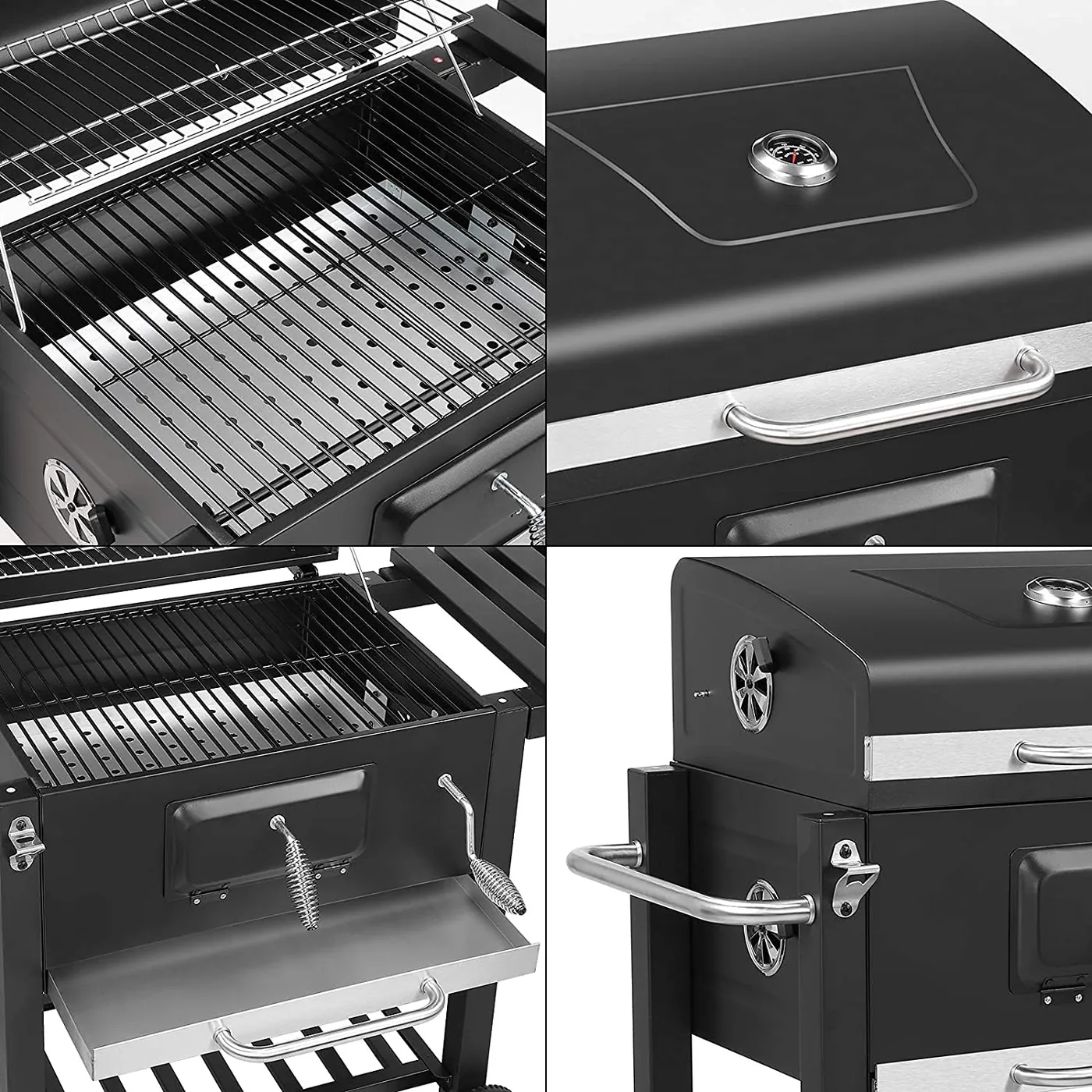
The AY-TL020 charcoal grill illustrates why a base-model change matrix is useful. Buyers can record which visible features stay unchanged and which require a new sample or test.
Use a Controlled Sample and Change Process
Approve the sample against signed documents, not memory or chat messages. Record dimensions, materials, finishes, components, labels, packaging and functional checks. Give the approved sample a model identifier and revision date.
After approval, require written authorization for substitutions or design changes. The final inspection should compare production with the approved file. It cannot repair an unclear sourcing agreement or missing compliance evidence.
Information to Include in the RFQ
- Target countries, customer type and planned sales channel.
- Reference product, SKU, drawing or performance brief.
- Expected order quantity by model and forecast frequency.
- Requested materials, dimensions, functions and finishes.
- Logo, control-panel, manual and packaging requirements.
- Required compliance evidence and target launch date.
- Expected design ownership, tooling and exclusivity terms.
- Sample, testing, inspection and spare-parts expectations.
Choose the Model That Matches Your Resources
The right choice between OEM vs ODM BBQ grills depends on the buyer’s design capability, differentiation target, budget, order plan and compliance resources. Private label can test a market efficiently. ODM can balance speed and customization. OEM can deliver deeper control when the buyer is prepared to manage development.
Before requesting a quotation, send AO YUE your target market, reference model, customization list and estimated quantity. The team can then confirm which sourcing route and product information require further review.
Reference Sources
- ITA Grill Manufacturer: buyer questions for OEM and ODM projects
- Keyfire BBQ: OEM and ODM process, customization and sample questions
- Bright Win: OEM, ODM and white-label service definitions
- Grillive: RFQ, sample and private-label preparation
Sources checked on 17 August 2026. Commercial terms and service scope must be confirmed for each AO YUE project.
