

Propane Fire Pit Certification for U.S. OEM Orders: ANSI Z21.97 and CPSC eFiling Checklist

Propane fire pit certification should be reviewed before a U.S. OEM order reaches final design approval. Buyers need to know which product configuration was evaluated, which market a certification mark covers, and whether the model in the quotation matches the model in the listing. A logo on a brochure is not enough.
This guide is for importers, distributors, private-label brands, and project buyers sourcing outdoor decorative gas appliances. It explains how to review ANSI Z21.97/CSA 2.41, certification listings, labels, manuals, OEM changes, and the new U.S. CPSC eFiling process. It does not claim that every fire pit follows the same regulatory route. The final obligation depends on the product, fuel system, destination, and applicable rules.
Why Certification Scope Matters in an OEM Order
A certification applies to identified products and controlled construction. Therefore, buyers should compare the certificate or directory listing with the exact model, manufacturer, fuel type, input rating, ignition method, and destination market in the purchase specification.
The word “certified” can also describe different situations. A complete appliance may be listed by a certification body. Alternatively, only a burner, valve, regulator, or ignition component may carry its own approval. Component evidence can support product development, but it does not by itself prove that the assembled fire pit is covered by a finished-product listing.
Start with a controlled RFQ. Identify whether the project uses propane or natural gas, and state whether the appliance is portable, stationary, or built-in. Buyers can review AO YUE’s fire pit category when defining the intended product format.
What ANSI Z21.97 and CSA 2.41 Cover
ANSI Z21.97/CSA 2.41 is titled Outdoor Decorative Gas Appliances. The published scope covers newly produced appliances intended for outdoor installation. It classifies products as portable, stationary, or built-in. The scope also addresses appliances connected to fixed fuel piping and certain self-contained propane supply systems.
The standard contains technical requirements used to evaluate the appliance. However, a standard and a certification mark are not the same thing. A certification body evaluates the submitted construction and, when its program requirements are met, authorizes an applicable mark and directory listing. The listing should identify the manufacturer, model or model family, standard, and market coverage.
Check the edition and destination
The CPSC currently identifies ANSI Z21.97-2017/CSA 2.41-2017 among voluntary standards associated with LP-gas appliances such as fire pits. Standards and local requirements can change. Consequently, the buyer should confirm the current edition and acceptance route with the certification body, importer, retailer, or authority having jurisdiction before placing the order.
Verify the listing independently
Do not rely only on a certificate image supplied in a quotation. Search the issuing body’s online directory by manufacturer, model number, or standard. For example, Intertek provides an ETL Listed Mark directory for this purpose. If the listing cannot be found, ask the certification body to confirm its status and scope.
Propane Fire Pit Certification Documents to Request
A useful compliance file connects the approved sample with production. Request documents early enough to resolve gaps before tooling, packaging, and mass production begin.
- Certificate and directory record: record the issuing body, file number, manufacturer, models, standard, and market.
- Test report or report summary: confirm that the document relates to the same construction and fuel configuration.
- Critical-component list: identify controlled burners, valves, regulators, hoses, ignition parts, fasteners, and other safety-related items.
- Rating label: review model identity, fuel information, input rating, warnings, certification mark, and required traceability.
- Installation and operating manual: check outdoor-use statements, assembly steps, clearances, cylinder or piping instructions, warnings, maintenance, and troubleshooting.
- Change history: retain approved drawings, bills of materials, artwork, and the final sample revision.
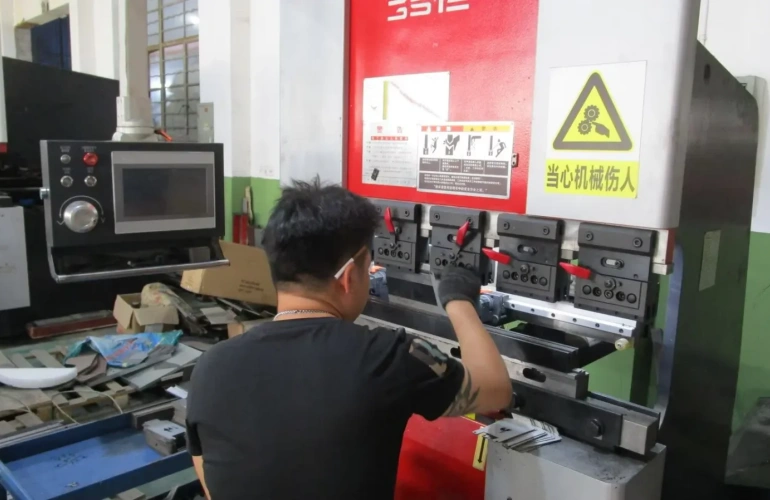
Buyers evaluating manufacturing controls can also review how AO YUE connects product development with metal fabrication and OEM/ODM processes.
Finished-Appliance Evidence vs Component Evidence
This distinction deserves a separate review. A listed burner system may have useful test evidence, yet the completed table adds an enclosure, ventilation openings, clearances, controls, decorative media, labels, and installation instructions. Those additions can affect the final evaluation.
Ask the supplier to identify what the certification file actually covers. Then compare the listing with the nameplate and manual for the finished unit. If a component has a separate mark, record it as component evidence instead of describing the entire fire pit as certified.
OEM Changes That Need Certification Review
Private-label work often begins with an existing platform. Even so, a seemingly small change can affect the approved construction or documentation. Before approval, send proposed changes to the certification body or qualified compliance specialist.
- changing the burner, valve, regulator, hose, ignition system, or control;
- changing propane to natural gas, or offering a conversion option;
- changing the enclosure, ventilation openings, wind guard, or decorative media;
- changing the input rating, model number, manufacturer identity, or certification label;
- changing required warnings, installation instructions, or market language;
- moving production to another factory or substituting a controlled material.
The correct action may be a documentation update, engineering review, additional testing, or a new listing. It depends on the certification program and the effect of the change. Buyers should obtain written confirmation rather than assume that an earlier report remains valid.
How CPSC eFiling Fits Into the U.S. Import Process
On July 8, 2026, the CPSC eFiling requirement took effect for most imported consumer products that are already subject to a CPSC certification requirement. The importer submits certificate data electronically through the U.S. import process. The CPSC also states that eFiling does not create a new testing or certification obligation.
This boundary is important. The CPSC lists ANSI Z21.97/CSA 2.41 as a voluntary standard for outdoor decorative gas appliances. A buyer should not conclude from that listing alone that every propane fire pit automatically requires a CPSC General Certificate of Conformity or eFiling. First determine whether the finished product is subject to a CPSC-enforced rule, ban, standard, or regulation that requires certification.
If certification is required, the overseas manufacturer can support the importer with model data, test dates, laboratory details, reports, and production records. Nevertheless, the U.S. importer remains responsible for the applicable certificate. Importers should use current CPSC guidance, the Regulatory Robot, a customs broker, or a qualified compliance adviser to confirm their product’s filing route.

Pre-Production Compliance Checklist
- Define the destination market, fuel type, installation type, input rating, and sales channel.
- Confirm the applicable standard edition and any retailer, local, or project requirements.
- Verify the certification-body directory entry by manufacturer and model.
- Confirm whether the listing covers the finished appliance or only selected components.
- Match the certificate, report, rating label, manual, bill of materials, and sample revision.
- Submit every proposed OEM change for documented compliance review.
- Determine whether CPSC certification and eFiling apply to the finished imported product.
- Add document and label checks to the production inspection plan.
Questions to Add to a Fire Pit RFQ
- Which exact models and fuel configurations appear in the certification directory?
- Does the listing cover the complete appliance, the burner system, or both?
- Which factory and critical components are included in the certification file?
- Which OEM changes need approval, testing, or a revised listing?
- Can the supplier provide the label artwork, manual, report reference, and model matrix?
- How are controlled components and finished-product revisions traced during production?
Prepare a Documented Propane Fire Pit Project
A strong propane fire pit certification review connects the product listing with the actual model, controlled construction, labels, manual, and import responsibilities. It also separates verified evidence from marketing language. That discipline makes quotations easier to compare and reduces the risk of discovering a documentation gap after production begins.
Learn more about AO YUE’s manufacturing background. To discuss an outdoor gas appliance project, send AO YUE your target market, fuel configuration, expected quantity, and required compliance documents. The team can review manufacturing requirements without making certification claims that have not been verified for the selected model.
Technical References
- ANSI Z21.97-2017/CSA 2.41-2017: Outdoor Decorative Gas Appliances
- U.S. CPSC: LP Gas Appliances and Voluntary Standards
- U.S. CPSC: Certificates of Compliance and eFiling
- U.S. CPSC: eFiling Frequently Asked Questions
- Intertek: ETL Listed Mark Directory
This article is a procurement guide, not legal, customs, installation, or certification advice. Requirements must be confirmed for the final product, production site, destination, and sales channel.
