

Gas Grill Grease Tray Cleaning Access: An OEM Sample Review Checklist for Retail Buyers

What You’ll Learn
This sample review guide helps retail buyers check whether a gas grill’s grease tray can be reached, removed, cleaned, and reinstalled as the product instructions describe. It shows what to demonstrate on a physical sample, which observations to photograph, and how to resolve differences between the grill and its manual before approving OEM production.
A gas grill grease tray cleaning access OEM sample checklist belongs in the hands-on review, while the exact grill is available. The question is not whether a product page says “removable.” The buyer needs to see the grease collection path, reach the relevant components, and confirm the intended cleaning route without guessing from a promotional photograph. The supplier’s approved sample and manual should describe the same configuration.
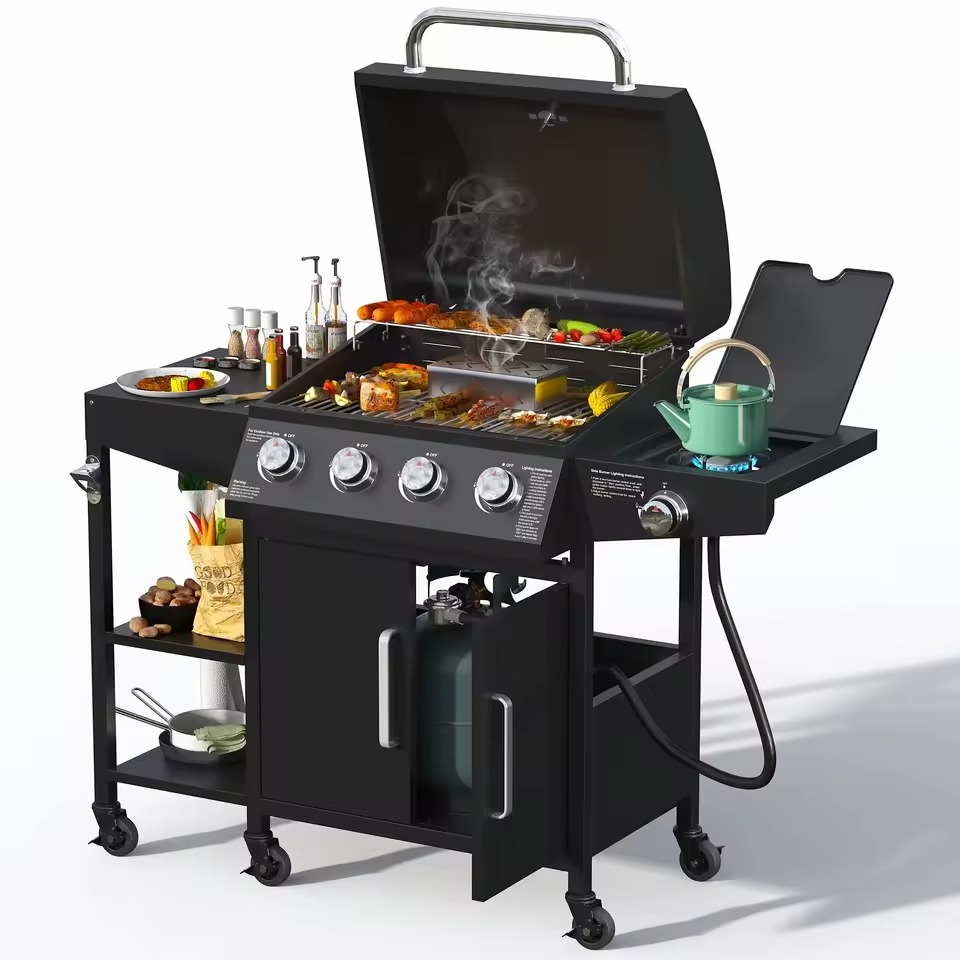
Start with the gas grill product category and identify the exact product record. AO YUE’s four-burner propane grill product page describes a removable, enamel-coated grease tray. That product field is a starting point for asking what the approved sample and user instructions actually show. It does not establish a removal direction, cleaning clearance, or the tray specification of other models.
Map the Grease Collection Path on the Sample
Ask the supplier to identify where drippings leave the cooking area and which parts guide them into the collection component. The sample reviewer should be able to point to the tray or pan, any separate catch container, and the route used for routine cleaning. Record the names used in the product manual. “Grease tray,” “drip pan,” and “catch cup” may refer to different items in different designs, so the parts list should remove ambiguity.
Review the complete installed assembly, not a loose tray displayed beside the grill. Panels, shelves, cylinder storage, or cabinet doors can affect access after the grill is built. Note which parts must be opened or removed before the tray can be handled. If the process differs from the instructions, record the difference rather than rewriting the manual from memory.
Demonstrate Removal and Reinstallation
Check the access route
With the appliance cool and prepared according to the manufacturer’s instructions, have the supplier demonstrate the tray’s intended removal route on the approved sample. Observe whether the handhold is accessible, whether the tray clears adjacent parts, and whether it can be withdrawn in the assembled retail configuration. A photo sequence should show the installed position, the removal step, and the tray outside the grill.
Check seating and orientation
Put the cleaned tray back using the product instructions. Verify that its orientation, locating points, and final seated position are clear to the reviewer. The sample record should state whether the tray returns to the location shown in the manual. An easy removal demonstration is incomplete if the part can be returned incorrectly or if a required component is missing from the instructions.
The BBQ grill pre-production sample approval checklist covers the wider decision to approve a grill before bulk production. This guide gives the grease collection area its own demonstration and evidence set within that review.
Compare the Manual With the Physical Grill
Place the latest manual proof, exploded parts view, and sample together. Check that each illustrated tray, insert, cup, or access door exists in the sample and carries a consistent name. The instructions should show the path the reviewer actually used. If the retail version has a cabinet, side shelf, or other feature that changes access, the manual must reflect that version rather than an earlier layout.
Review cleaning language with the supplier’s applicable instructions and target market in mind. A competitor manual can reveal a useful question, but it cannot define how an AO YUE model is cleaned. For example, a Weber owner’s manual illustrates a slide-out tray and separate drip pan for its own grill. Its cleaning frequency and parts are not specifications for this project.
Record Sample Findings Before Sign-Off
Capture the sample identifier, product drawing revision, manual revision, reviewer, and date. Record whether the grease tray was accessible, whether any other part obstructed it, and whether the documented cleaning sequence matched the physical unit. Photograph open questions and identify who will close them. A vague “tray approved” note gives the production and documentation teams little to work with.
When a change affects the tray, surrounding panel, support, or manual, repeat the relevant demonstration on a revised sample. The buyer should verify the current configuration before approving the next artwork or production release. This keeps the physical product, customer instructions, and service expectations aligned.
Turn the Review Into a Production Check
Once the sample review is complete, define an observable acceptance point for production inspection: the correct tray is present, located as approved, and can be accessed according to the final manual. The pre-shipment inspection guide discusses how buyers plan broader final checks. An inspector should use the approved model-specific sample and documents, not assume that every gas grill has the same grease collection system.
The gas grill OEM specification sheet guide helps buyers lock wider product requirements before sampling. The cleaning-access result should be attached to that controlled product record rather than buried in an informal email. The original specification, sample sign-off, and final manual should point to the same version.
Retail Buyer Review Questions
Use this gas grill grease tray cleaning access OEM sample checklist when reviewing the sample:
- Which exact grill model, market, and product revision is under review?
- What are the supplier’s names for the collection tray and any separate container?
- Can the installed tray be reached and removed along the documented path?
- Do adjacent panels and cabinet features allow the intended access?
- Can the tray be returned to its correct seated orientation?
- Do the manual illustration and parts list match the approved sample?
- Are photographs, open issues, and the final reviewer decision recorded?
Frequently Asked Questions
Does “removable grease tray” on a product page complete the sample review?
No. The product field identifies a feature to check. Access, removal, reinstallation, and instruction accuracy need demonstration on the applicable sample.
Should every gas grill use the same cleaning instructions?
No. The instruction set must match the relevant model, parts, and market. A different grill may use a different collection layout.
What if the tray is accessible but the manual shows an older layout?
Hold documentation approval, identify the correct revision, and compare the updated proof with the sample before sign-off.
Review an AO YUE Gas Grill Sample
Share your selected grill reference, destination market, retail configuration, and manual proof with AO YUE. Ask the project team to demonstrate the grease collection area on the actual sample and document any changes before OEM production. This gas grill grease tray cleaning access OEM sample checklist is a review workflow, not a claim that every AO YUE grill uses an identical tray.
Contact AO YUE about a gas grill OEM sample.
Source and Scope Note
Sources reviewed for the U.S. market on 5 November 2026 include AO YUE’s four-burner product field, the Weber manual as a different manufacturer’s technical example, and NFPA grilling safety advice on cleaning grease buildup. Neither external source establishes the design or maintenance schedule of an AO YUE model.
